A podcast clipping business turns long podcast episodes into short, scroll-stopping video clips and distributes them everywhere the show's next listeners are scrolling, for a monthly retainer. Premium clip-and-amplification retainers run roughly $1,500 to $3,000 or more per client a month, and one episode becomes 15 to 25 assets.
It exists because a podcast is the single worst format for being discovered. To find one, you have to already know it exists, already subscribe, already press play, and already listen for eighteen minutes. Nobody discovers a podcast that way. They discover the clip. So podcasters sit on mountains of genuinely brilliant content that almost nobody ever sees, and the person who bridges that gap gets paid well and recurringly to do it.
Here is the part that makes it a real business and not a race to the bottom: the hard part is not the editing. Editing tools are learnable in a weekend. The rare, valuable, cannot-be-automated part is knowing which eighteen seconds out of ninety minutes is the one. That is taste and judgment, and it is exactly what AI cannot replicate.
The video tells the whole story in one sitting. The written breakdown below stands on its own and goes deeper on the economics and why judgment, not editing, is the thing you are actually paid for. Read it, watch it, or both.
What does a podcast clipping business actually do?
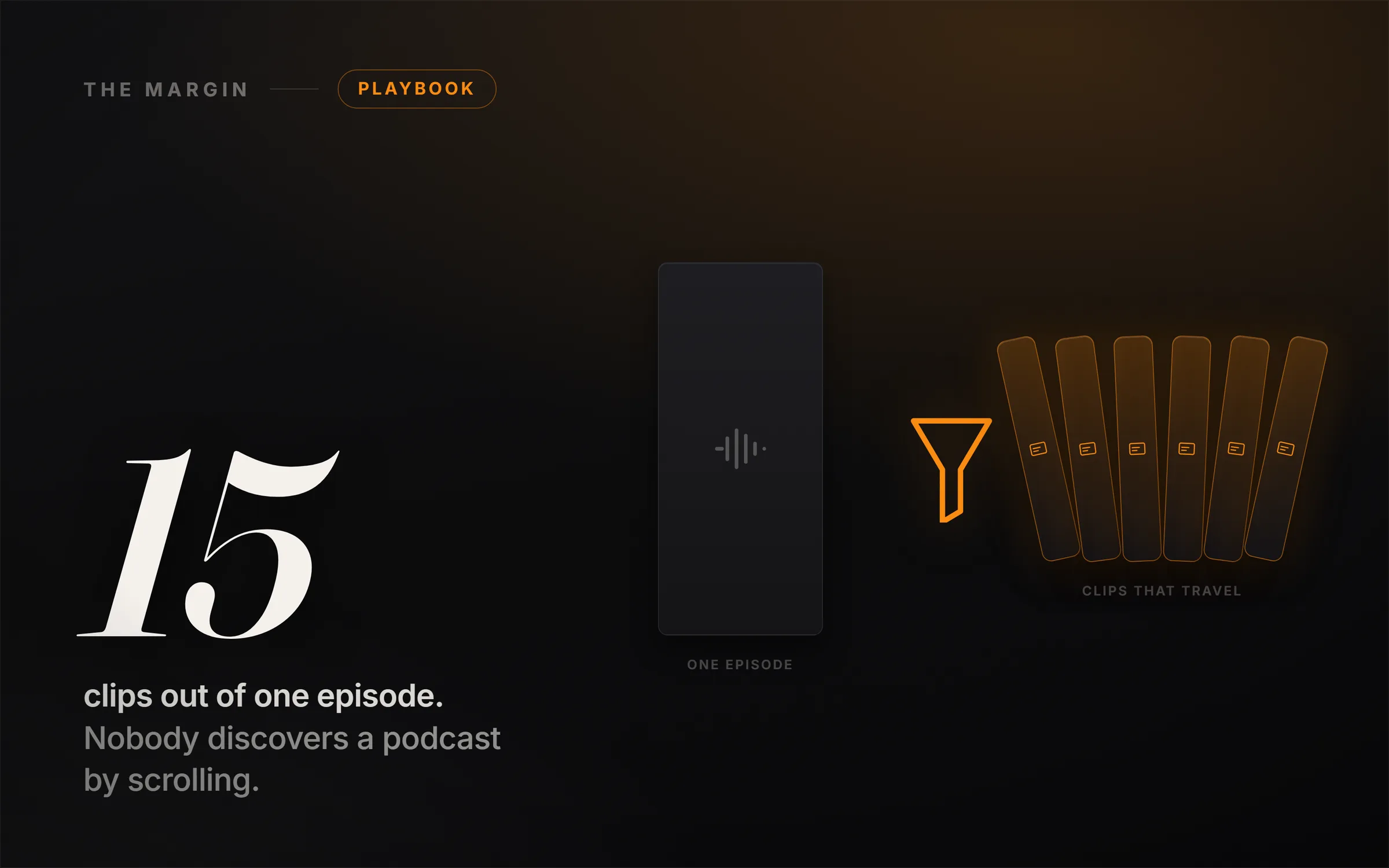
You take a show's long episodes and turn them into the short, sharp, scroll-stopping clips that actually get discovered, then you distribute those clips across every feed the show's audience uses. One ninety-minute episode is not one piece of content. It is raw material for a dozen or more. A single episode typically contains six to ten genuinely strong moments, and each of those can become multiple assets tailored to different platforms: a vertical clip for Reels and Shorts and TikTok, a quote graphic, an audiogram, a written hook for a text post.
That single episode, which the podcaster experienced as one upload, becomes fifteen to twenty-five pieces of distributed content pulling new listeners back to the show. The podcaster did the hard creative work once. You multiply its return without them lifting a finger. You are not charging them to make clips. You are charging them to multiply the reach of content they were going to create anyway.
How much can a podcast clipping business make?
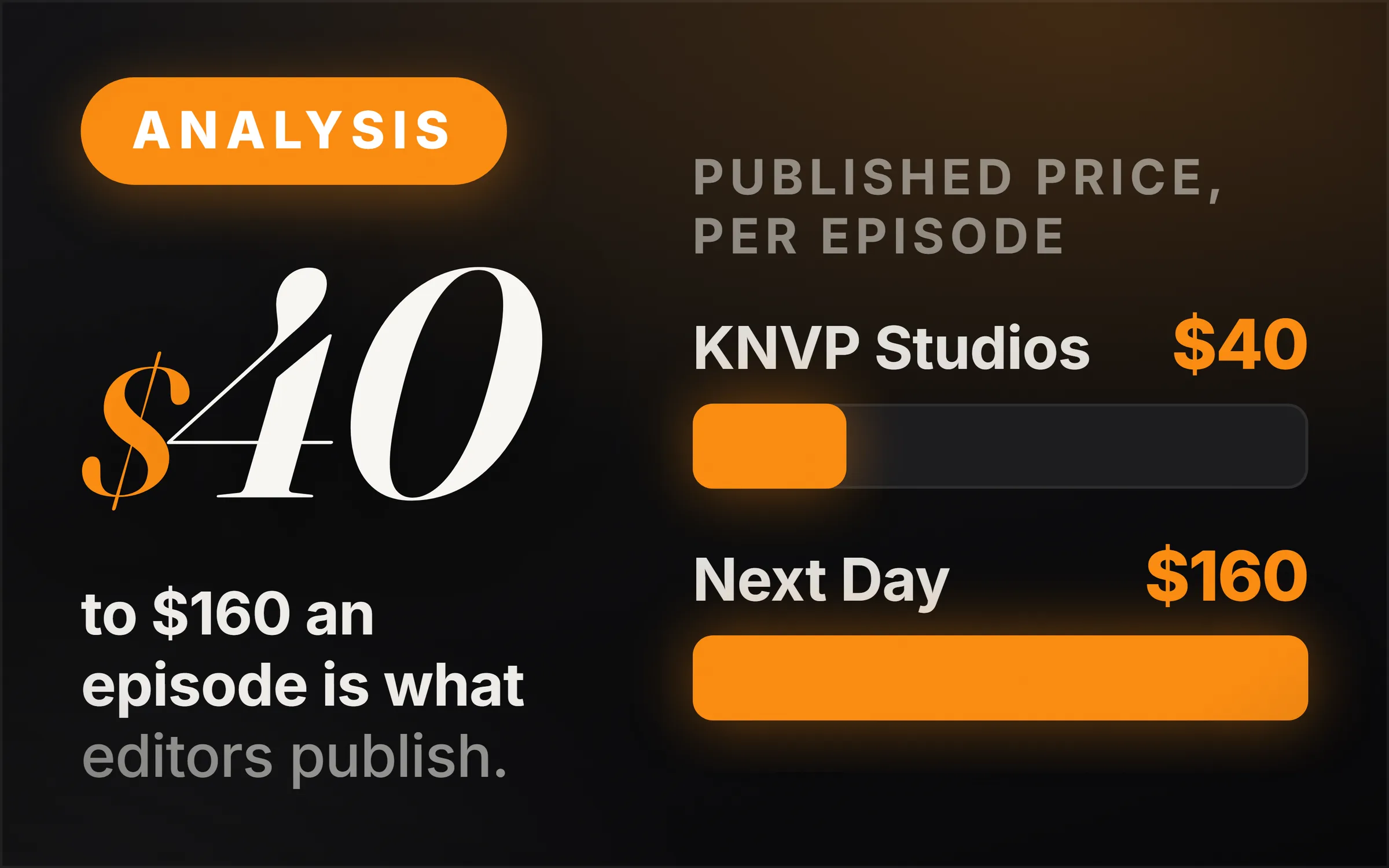
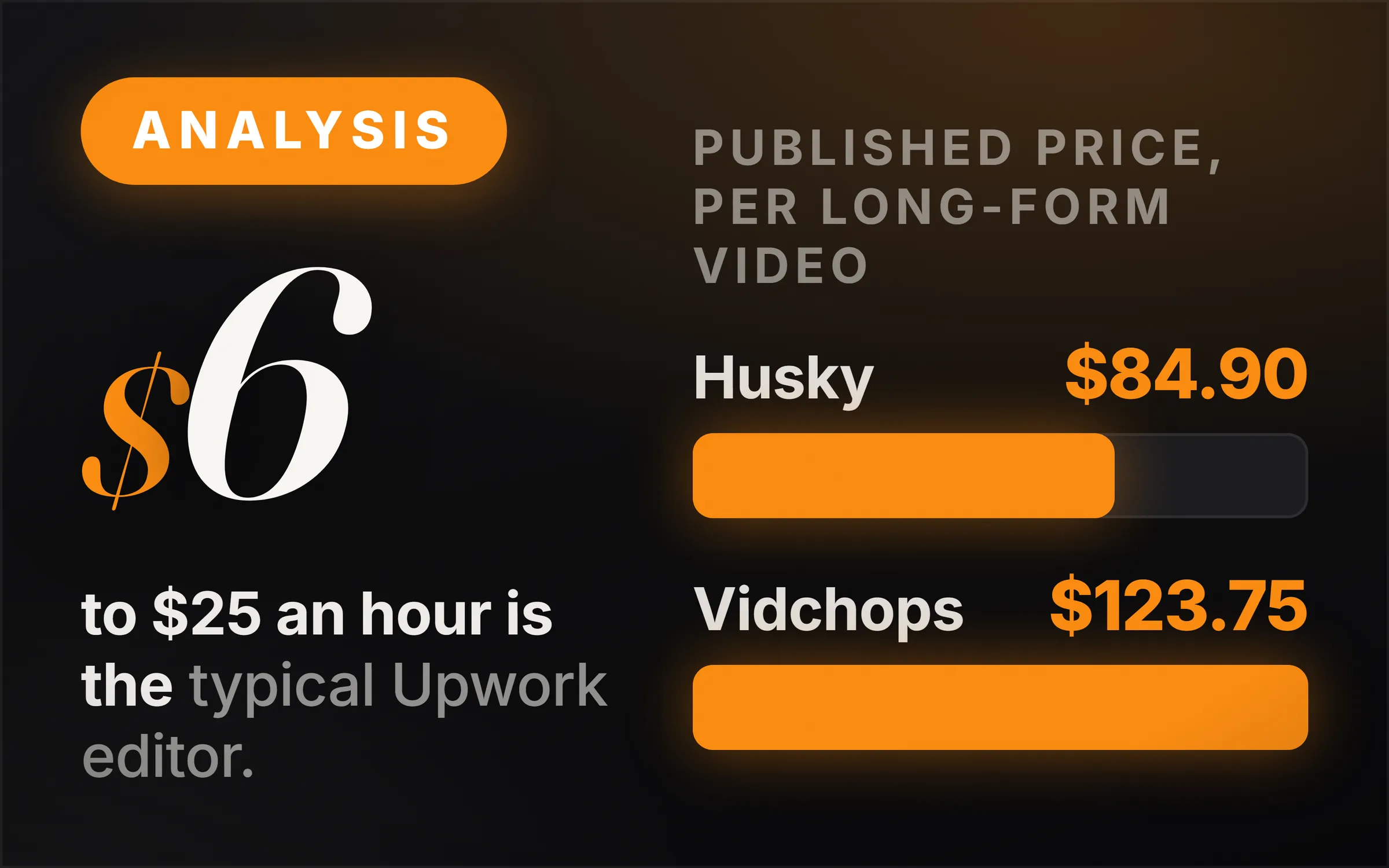
The money is a stack of recurring retainers, not a per-clip fee. The market is split, and where you position yourself decides everything. At the bottom sits commodity clipping at a few dollars per clip, a miserable, price-competitive business you want no part of. In the middle and at the top, premium clip-and-amplification retainers run roughly $1,500 to $3,000 or more per client per month, with full content-system packages reaching higher.
How the income stacks
- 1 client: a single premium retainer covers your entire tool stack many times over, since costs run under $100 a month. Break-even is one client.
- 3 to 6 clients: roughly $5,000 to $15,000 a month, mostly profit. This is the honest solo ceiling, set by your hours, and for many people it is the right place to stop.
- The agency fork: past the solo ceiling you can hire editors under your quality oversight and serve fifteen or twenty clients, pushing revenue toward $30,000 or more a month, at lower margin per client but far higher total.
The reason you can charge this is the alternative. Every hour a podcaster spends clipping is an hour not spent on their business or their show, and most serious ones are worth far more per hour than your retainer divided by your time. Framed against hiring an in-house content person, or against their own time, the premium retainer is the cheap option.
Won't AI just do all of this?
This is the fear worth naming directly, and the honest answer is that AI already does parts of it, and that is fine, because it removes your grunt work rather than your value. AI can transcribe an episode, suggest rough clip points, auto-caption, and clean up audio in minutes. Use all of it for speed.
What it cannot do is exercise judgment about what will resonate with a specific human audience, because that requires feeling what a person feels when they scroll. AI cuts on patterns in the data. It cannot sense that a particular pause, a particular phrasing, a particular vulnerable admission is the moment that will make ten thousand people stop. The clipper who leans on AI to also choose the moments produces average clips. The one who uses AI for speed and their own taste for selection wins. This is the same argument we made in how to make content AI can't copy: the tools getting better does not threaten the human with judgment, it makes that judgment the only scarce thing left, and therefore more valuable.
Do you need to be technical or good at video?
No, and this is the rare business where "I am not technical" is genuinely not a problem. The technical skills, operating the software and adding captions and exporting the right format, are learnable by anyone in a week or two, and the tools do more of that work every month. But editing skill is not what makes this work. The judgment of what to clip and why is what makes it work, and that is a different muscle entirely, one you may already have.
If you can scroll social video and feel why some clips grab you and others do not, you have the raw material. Highly technical editors frequently make beautiful clips that do not travel, because they focus on craft for its own sake rather than the human moment. The person with strong taste and adequate technical skill beats the technically brilliant person with no instinct for what resonates, because the market rewards travel, not polish.
Why is now a good time to start?
The timing is unusually good, for reasons that have nothing to do with hype. Podcasting is enormous and still growing, with millions of active shows and podcast advertising revenue projected to surpass four billion dollars in the US alone. Every one of those shows needs to grow, and the way you grow a podcast now is short-form clips. Meanwhile short vertical video became how discovery happens across every platform, so a podcast that is not being clipped is invisible to the entire discovery engine of the modern internet. Podcasters know this, which creates the demand, and most cannot act on it, which creates your opening.
The flood of cheap five-dollar clipping services actually helps you. It has trained serious podcasters that cheap clipping produces nothing, so the ones with real budget and ambition are specifically looking for someone who is not cheap and who brings judgment. The race to the bottom cleared the bottom and left the premium space wide open.
How do you get your first client without a portfolio?
With the single strongest move in this business: the sample-clip pitch. Most service businesses cannot easily demonstrate their value before being hired. You can, completely. You take a prospect's existing episodes, make two or three genuinely excellent sample clips for free, and send them with a short, honest note explaining what you noticed about why those moments work.
This collapses the trust problem that makes selling hard for a beginner. You are not asking a podcaster to believe a promise. You are showing them a finished result from their own content that is visibly better than anything they have, and explaining the judgment behind it. A new operator with no track record can land clients this way, because the samples make the lack of a track record irrelevant. Naming that move is easy. Running the full loop, building the prospect list, researching fast, finding the contact, and making the samples that close, is the part worth doing carefully, and it is exactly what the podcast amplification walkthrough lays out step by step.
It sits alongside the other content businesses we have broken down where a human skill is the real product, like turning Shorts into high-ticket clients: the clip earns the attention, and the judgment behind it is what a machine cannot copy.
The gold is already recorded. Someone just has to make it travel.