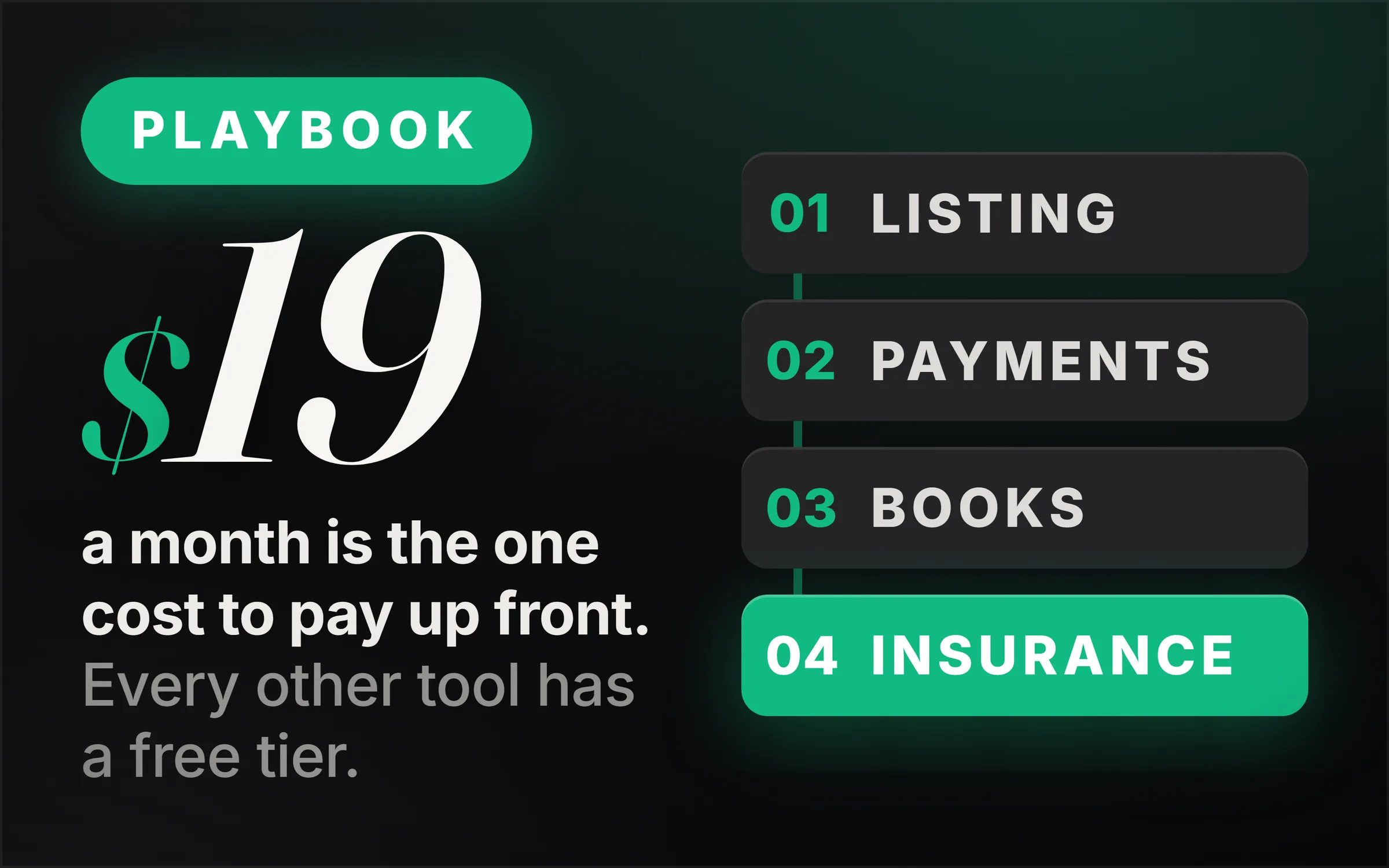
You can start a cleaning business with almost no money by selling the first job before you buy anything, using free tools for every task (listing, invoicing, payments, books), and paying for one thing up front: liability insurance, which starts at $19 a month. Use your own household supplies or the client's for the first jobs, and let the first payments buy the professional kit.
That order is the whole method. Most people reverse it: they buy equipment, print flyers and pay for software, then look for customers. With no money, you cannot afford to guess what you need, so you let the first paying client tell you.
Can you start a cleaning business with no money?
Yes, close to it. A residential cleaning business needs no premises, no stock and no licence to clean in most places, and every tool it runs on has a free tier. The one cost worth paying before your first job is liability insurance, published from $19 a month by Next Insurance.
The reason this business can start from zero is the reason it is crowded: there were 1,757,318 solo operators in the cleaning and landscaping services industry in 2022, according to US Census Bureau Nonemployer Statistics. Low entry cost is not an advantage on its own. It only becomes one if you use the money you did not spend on equipment to buy something better: time spent selling recurring work.
What do you actually need to start?
Four things, and only one costs money:
The zero-cost starting kit
- A way to be found: a Google Business Profile. Google's own page says: "creating a Business Profile and listing your business on Google is free." It puts you on Search and Maps, where local customers look first.
- A way to get paid: Square Free plan. No monthly fee; you only pay when you take a payment. On our 2 September 2026 capture, a tapped or swiped card cost 2.6% plus 15 cents, and an invoice paid by bank transfer cost 1% with a $1 minimum and a $5 cap.
- A way to keep books: QuickBooks Online's free tier or a spreadsheet. QuickBooks lists a free tier limited to one user and two invoices a month, enough to start. Its paid Simple Start plan lists at $38 a month when you outgrow it.
- Protection: general liability insurance, from $19 a month on Next Insurance's published pricing. This is the one line not to skip.
Supplies are not on the list on purpose. For the first few residential jobs, your own household products and equipment are enough, and many homeowners have their own products they prefer you to use. Ask when you book. The first payments then buy the kit you now know you need.
Do you need a business licence or an LLC?
Not to start, in most of the US. You can operate as a sole proprietor from the day you take your first payment, with no filing fee. An LLC is optional and can come later; it does not change your tax: the IRS self-employment tax threshold of $400 in net earnings applies to a sole proprietor and a single-member LLC owner the same way.
Two things are worth doing on day one, and both are free. Check your city or county's rules on a general business licence, because some local governments require one for any business and the fee varies. And if you want to keep your Social Security number off invoices and forms, get an EIN: the IRS says plainly, "You never have to pay a fee for an EIN," and warns, "Beware of websites that charge for an EIN." The full LLC question is in do you need an LLC.
How do you get your first cleaning client with no money?
Start with people who already trust you: neighbours, friends, family, and the people they know. Offer one specific service at one clear price, for example a fortnightly clean of a standard home, and ask each person for one name. Your Google Business Profile and a few honest reviews from those first jobs then bring in strangers.
What to avoid matters as much. Paid ads, printed flyers and directory listings cost money before you know who your customer is. A single satisfied regular client in a neighbourhood is worth more than any of them, because their neighbours see the same car every other week.
The way we recommend getting the first client in any service business, by doing a piece of the real work first, is in how to get your first client.
What should you charge as a new cleaner?
Charge by the job, not the hour, and charge enough to cover the time nobody pays for: travel, quoting, buying supplies and chasing payment. A new cleaner who prices at an hourly wage is working for less than an employee, because the self-employed pay the full 15.3% self-employment tax that an employer would otherwise split.
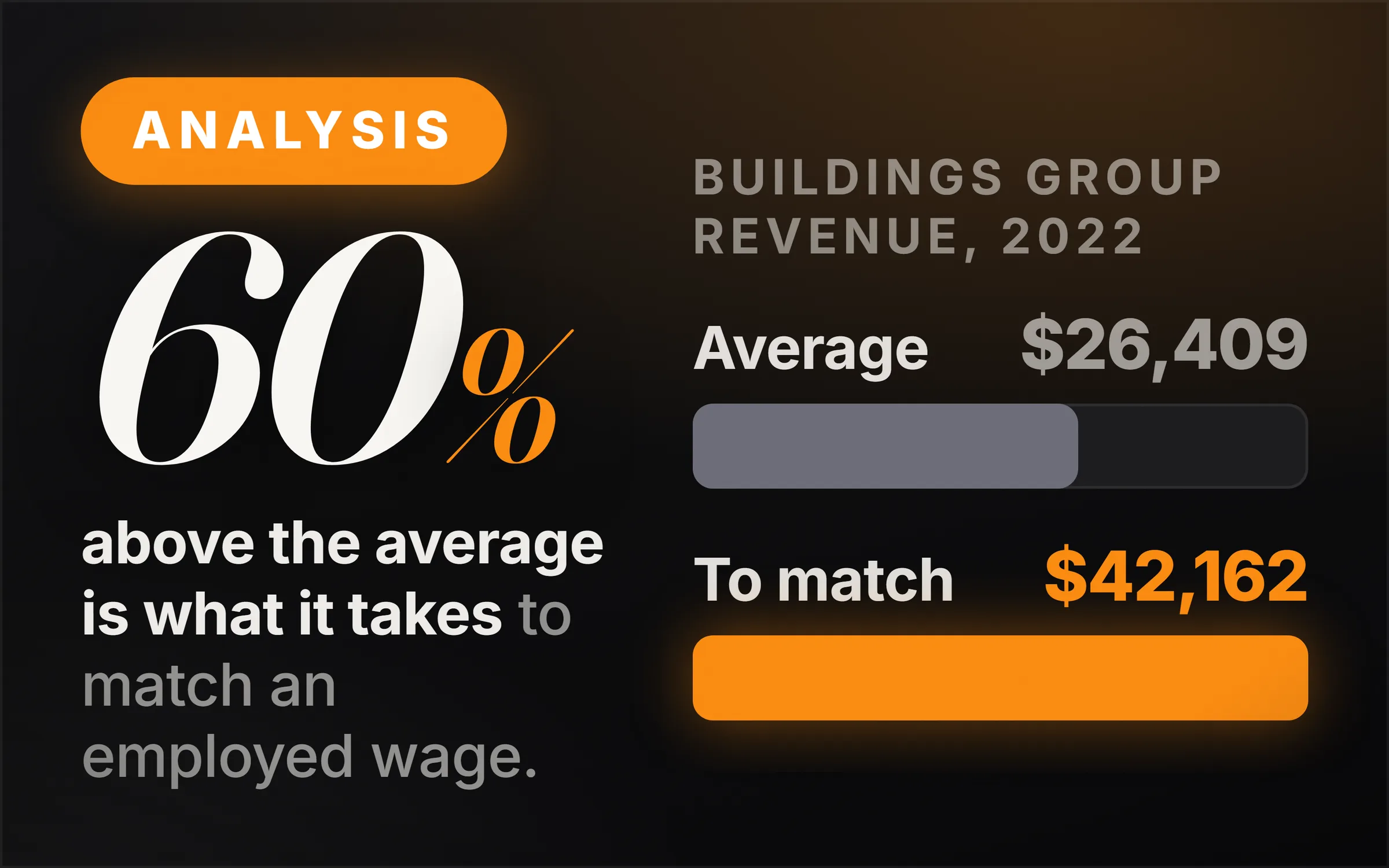
The benchmark worth knowing is the employed wage: the median for janitors and building cleaners was $36,840 a year in May 2025 (BLS). If your prices cannot beat that across a full week, including the unpaid hours, the business is a worse job rather than a business. Our free freelance hourly rate calculator works the rate out backwards from the income you need.
How much can a no-money cleaning business make?
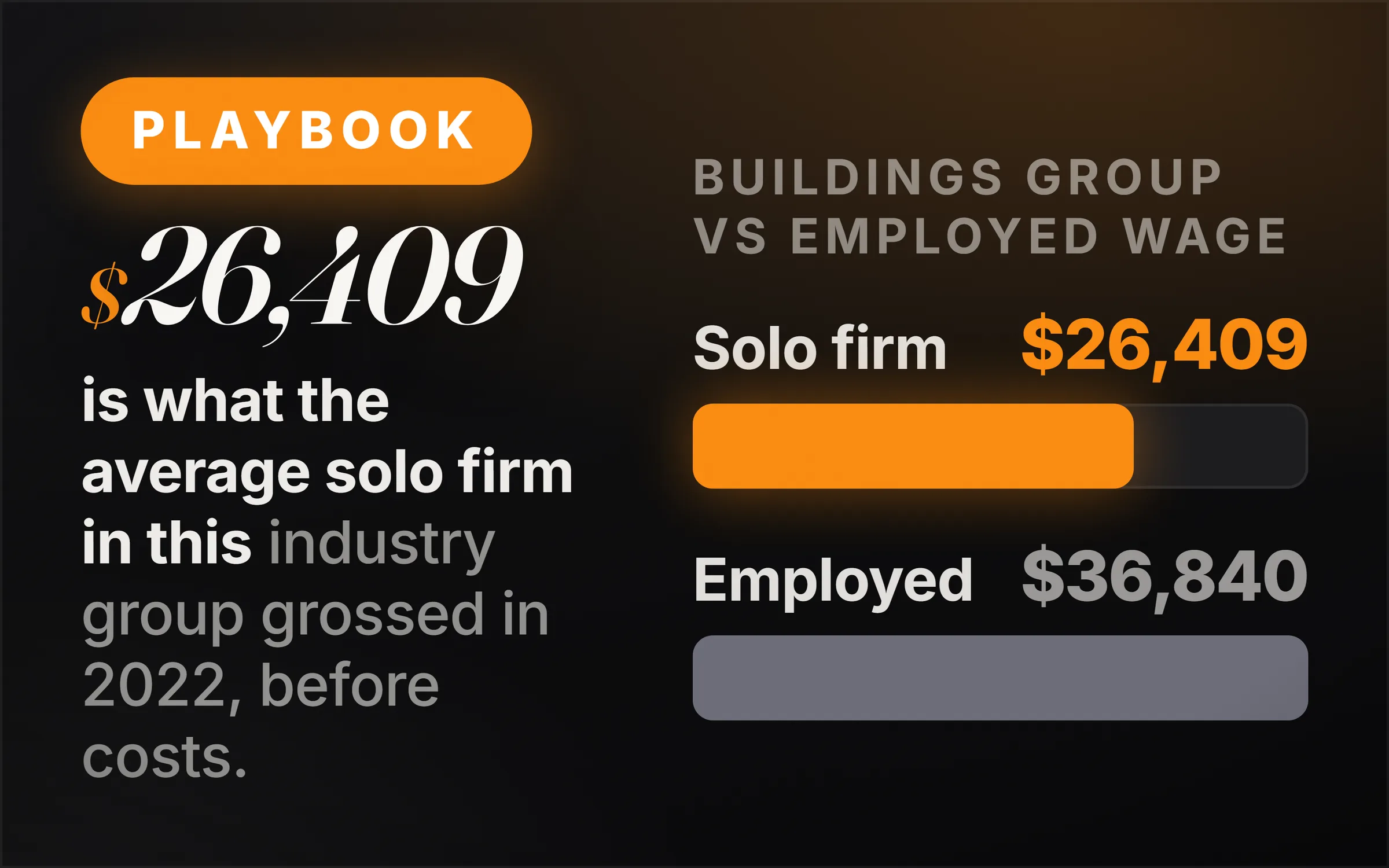
The average is modest: the average solo operator in cleaning and landscaping services grossed $26,409 in 2022, about $2,201 a month, per Census Nonemployer Statistics. That is below the $36,840 median employed cleaner wage, before any costs.
Being average is not compulsory, and the gap is mostly decided by three choices made in the first month: selling recurring weekly or fortnightly visits rather than one-off cleans, keeping jobs in one tight area so the day is spent cleaning rather than driving, and setting the price properly at the start, because raising it later on a regular client is harder. The honest version of the profit question is in is a cleaning business profitable.
When should you start spending money?
When a cost is paid for by a client you already have. The usual order is insurance first (before the first job), then better supplies from the first payments, then job software when the calendar is too full for a spreadsheet, then equipment for a specific contract that needs it.
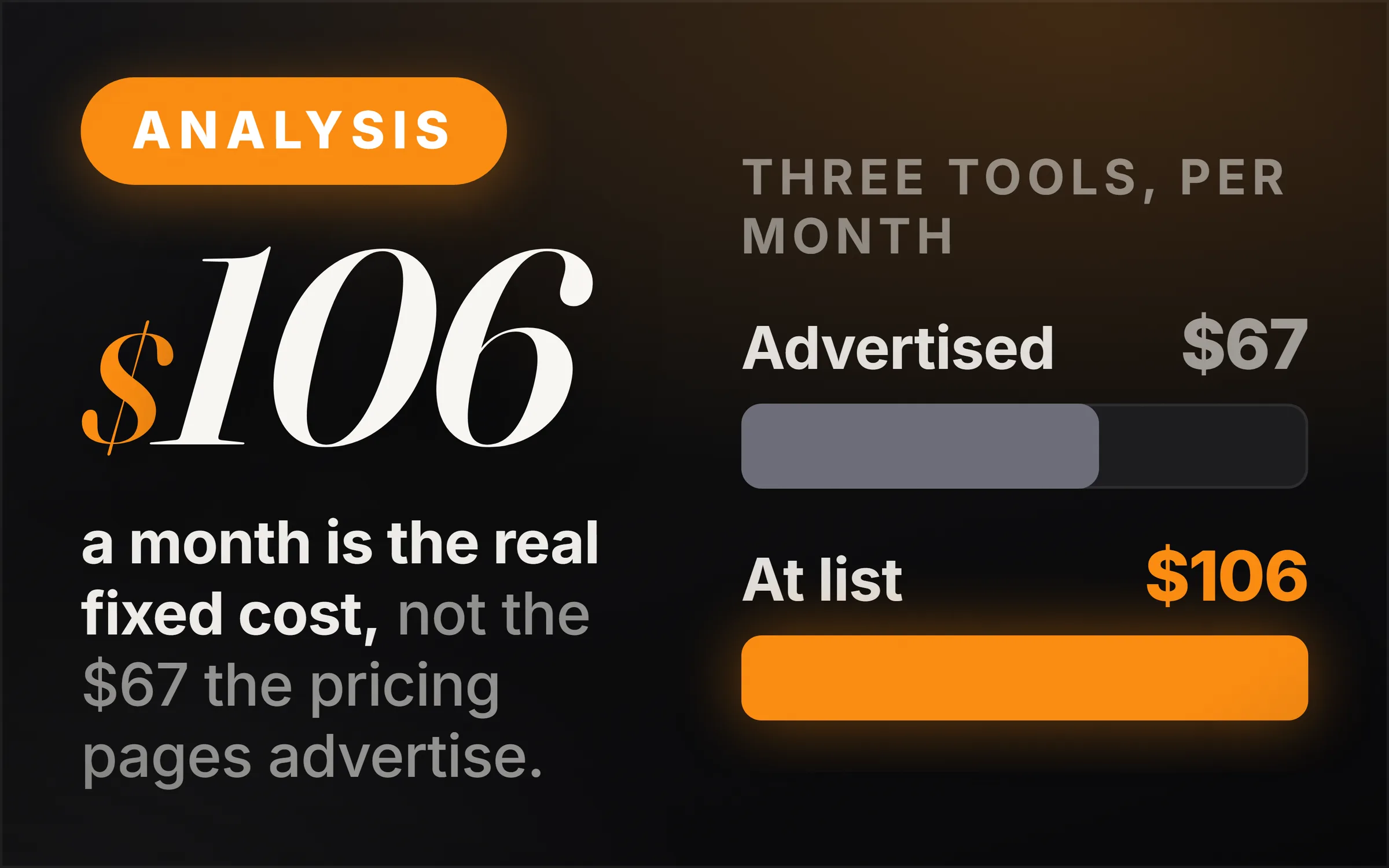
At full list price, the working stack most operators settle into, job software, accounting and insurance, costs about $106 a month, which we priced line by line in what it costs to start a cleaning business. With no money, you grow into that stack; you do not start with it.
The honest hard part
Starting with no money is easy. Staying with no money is the trap. The same low barrier that lets you begin this week let more than 1.7 million other solo operators begin too, and most of them sell one-off cleans to whoever calls, across a whole city, at a price copied from a competitor. That is how the average ends up at $26,409.
The other hard part is the time. A business that costs nothing is paid for in hours: the quotes that do not convert, the drive between jobs, the evening spent on invoices. Count those hours honestly from the first week, or the business will look profitable on paper while paying less than the job you could get instead.