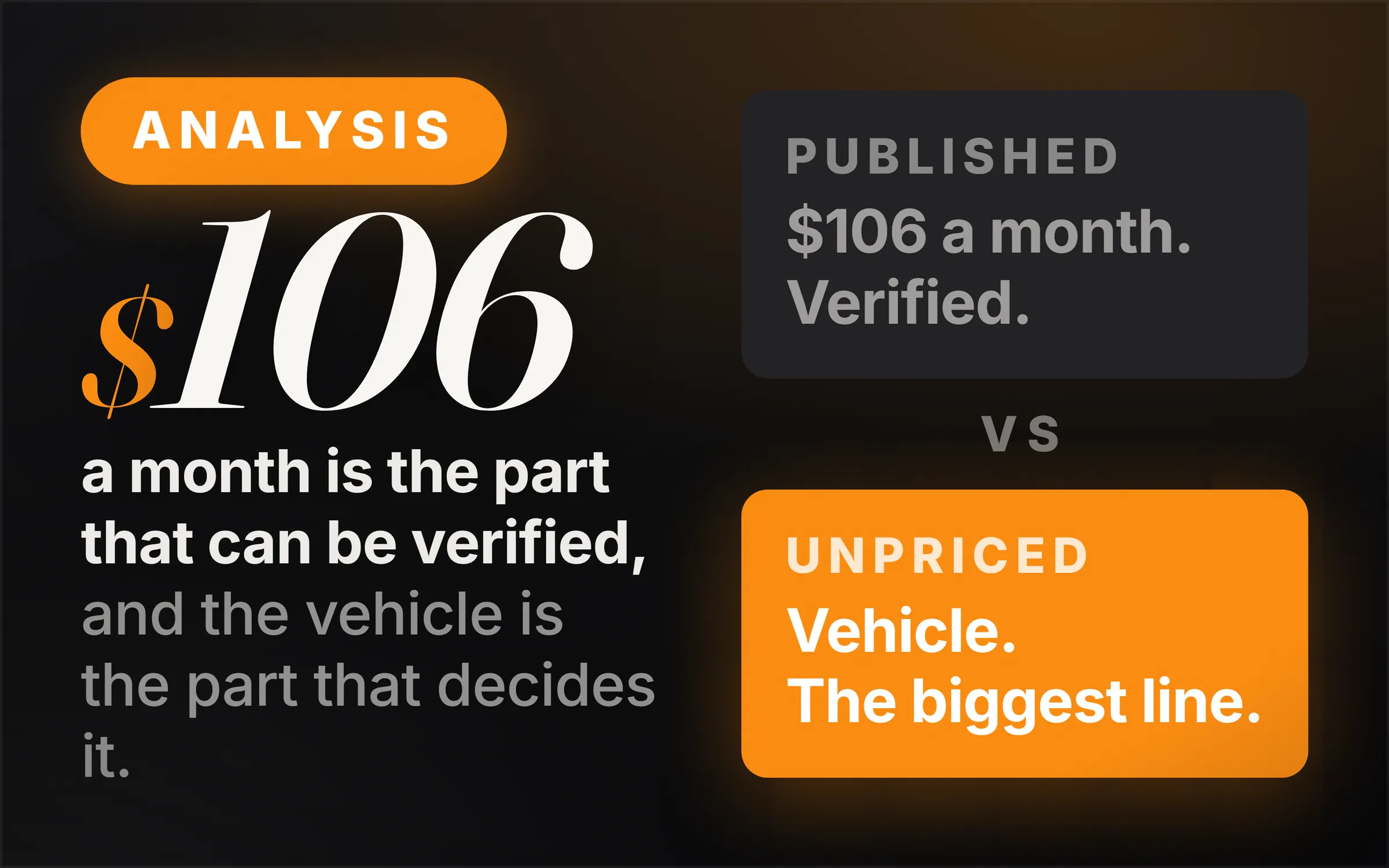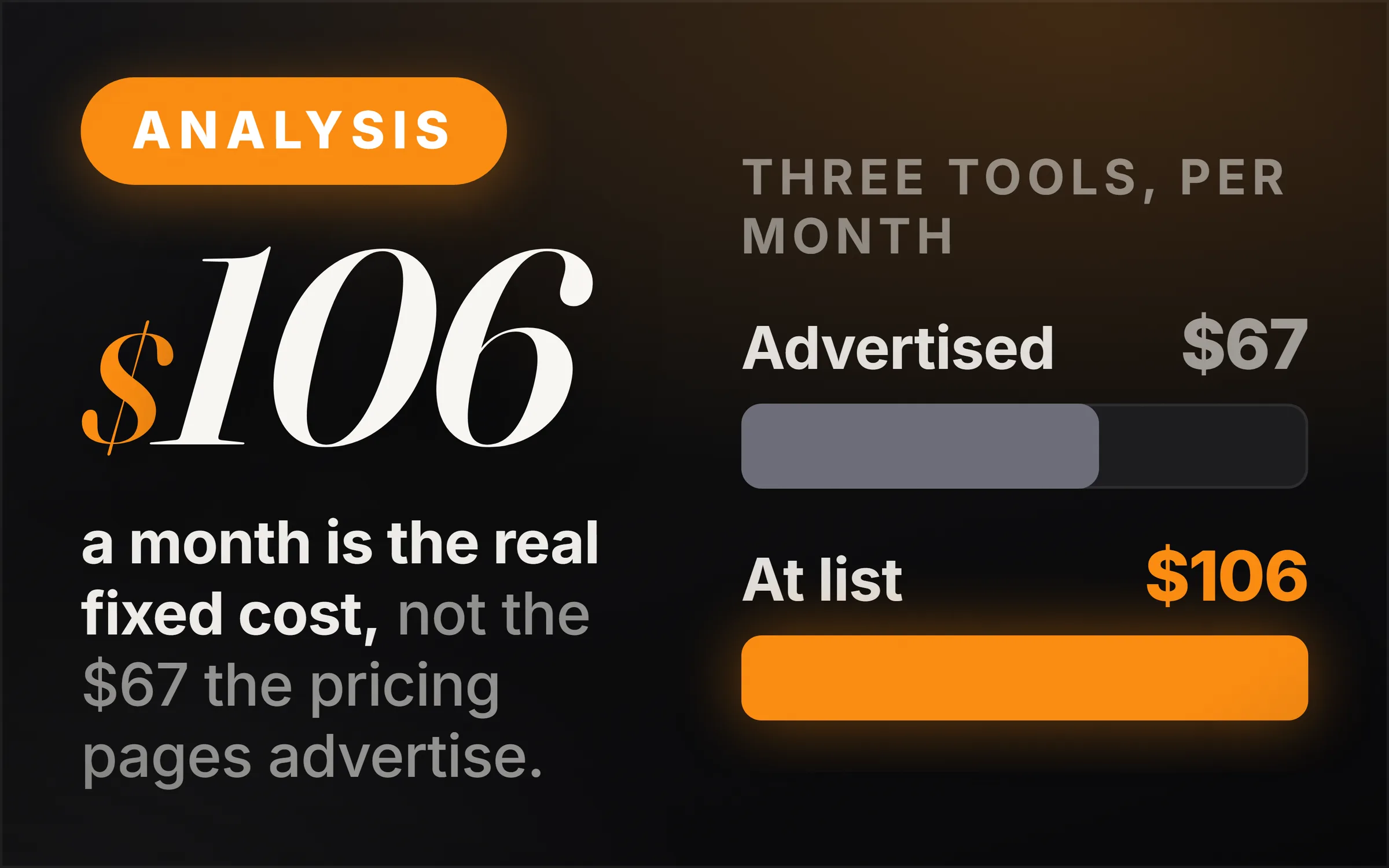
A cleaning business can be started for a few hundred dollars, and the recurring cost matters far more than the setup cost. Priced from the vendors' own pages at list, month to month, a minimum working stack of job software, accounting and liability insurance runs about $106 a month. The same three tools advertise at about $67 a month, which is where nearly every published cost list gets its numbers.
That $39 monthly gap, $468 over a year, is not a rounding error in a business where the average solo operator grossed $26,409 in 2022. It exists because two of the three prices are conditional: one requires twelve months paid up front, and one is a discount that expires after three months.
How much does it cost to start a cleaning business?
A few hundred dollars to begin, if you start with domestic-grade supplies and sell before you equip. The barrier in this trade has never been capital, which is exactly why there were 1,757,318 solo operators in this industry in 2022. The free tool for each job, and the order to spend in, is in how to start a cleaning business with no money.
The costs split into three groups and they behave completely differently. One-off setup is supplies, basic equipment and any registration fee, and it is small and controllable. Recurring overhead is software, insurance and phone, and it is the one that quietly decides whether the business works, because it is charged whether or not you have customers. Variable cost is fuel, consumables and payment processing, which scale with the work and are therefore the least dangerous.
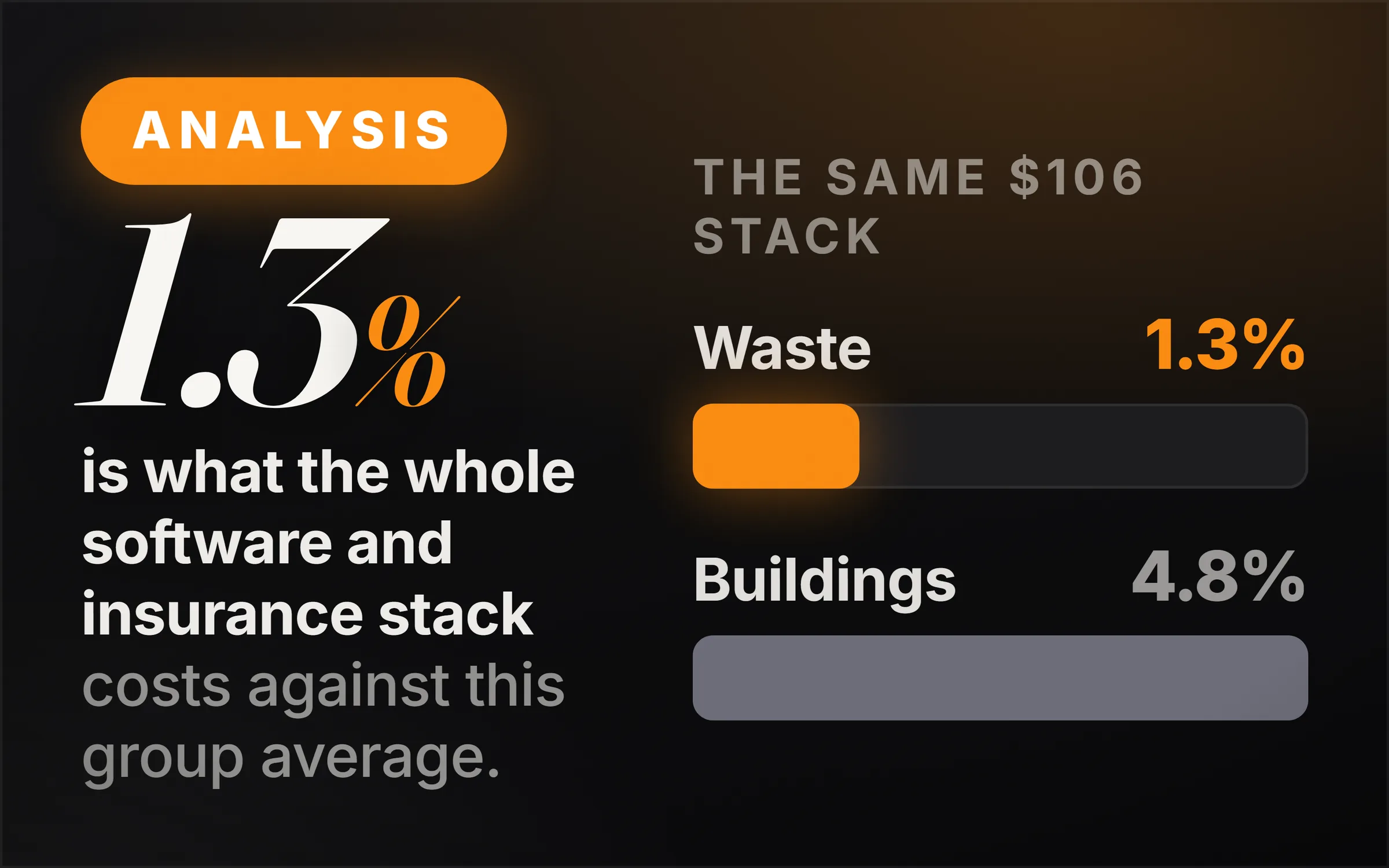
Most cost guides invert this, publishing a large impressive setup figure and ignoring the monthly. The monthly is what matters. A one-off $400 on equipment is one good week. A $106 monthly overhead against an average industry revenue of about $2,201 a month is a permanent 4.8 percent of the top line, before you have driven anywhere.
What does the software stack actually cost?
About $106 a month at list, month to month, for job management, accounting and insurance. Here is each line from the vendor's own page, with the advertised figure beside the real one.
The three recurring lines, advertised against list
- Jobber, Core plan. $29 a month paid annually up front, $39 on a one-year commitment, $49 a month with no commitment. The pricing page defaults to the annual view. Additional users are $29 a month each.
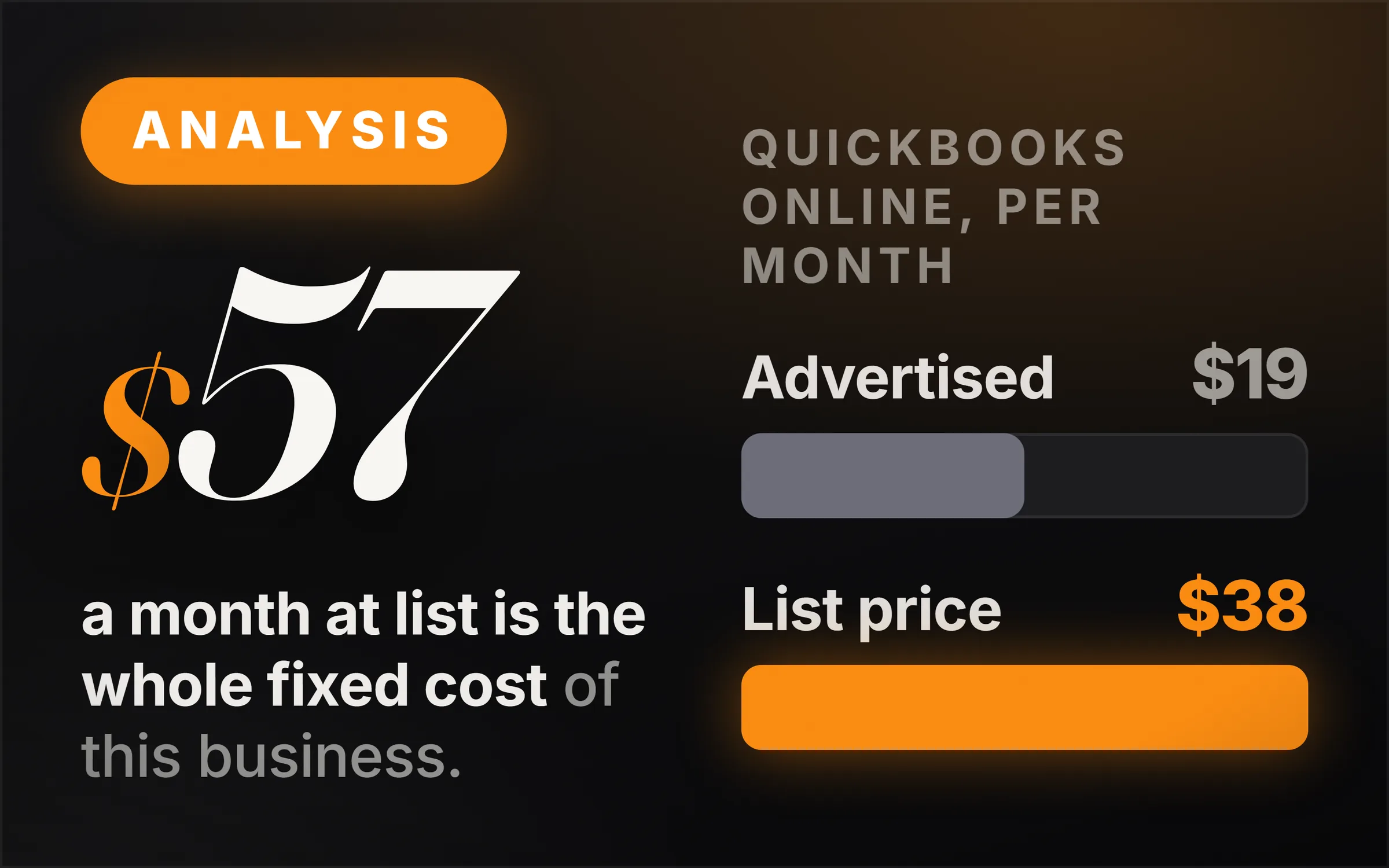
- QuickBooks Online, Simple Start. Advertised at $19 a month, which is 50 percent off for three months. List price is $38 a month. There is also a free tier limited to one user and two invoices a month.
- Next Insurance, general liability. Published as "Starting at $19/month" with a footnote reading "for some low-risk businesses." That is a floor for the safest customer, not a quote.
The pattern across all three is the same and it is worth naming, because it is the single most useful thing in this article. Vendors in this category publish the most favourable number they can defend, and it is almost always conditional. Jobber's headline requires a year paid in advance. QuickBooks's headline expires after three months. Next Insurance's headline applies to a risk profile that may not be yours.
Housecall Pro, the other common option here, prices the same way: its Basic plan is $79 a month billed monthly and $59 billed annually, with a 14-day free trial. Whichever you pick, the honest budgeting number is the no-commitment monthly price, because that is what a new business paying month to month while it finds out whether it works will actually be charged.
What does it cost to take payments?
Square charges 2.6 percent plus 15 cents for a tapped, dipped or swiped card on its Free plan, 3.3 percent plus 30 cents online, and 3.5 percent plus 15 cents for manual entry or a card on file. Bank transfer via invoice is 1 percent, with a $1 minimum and a $5 cap.
On an average month for this industry, roughly $2,201 in revenue across twenty card-present transactions, the card fee comes to about $60. That is more than the accounting software and it belongs in the plan, because it is routinely left out of cost lists entirely.
Two things follow from those rates. Manual entry is the expensive one, at 3.5 percent plus 15 cents, and it is what you use when you type a card number over the phone, which is a common habit in this trade. Taking the card in person on a reader is materially cheaper for the same money. And the ACH cap is the important number for commercial work: 1 percent capped at $5 means a $900 monthly contract paid by bank transfer costs $5 to collect rather than about $24 on a card. On recurring commercial contracts, moving payment to bank transfer is one of the cleanest margin improvements available.
What does insurance cost, and do you need it?
General liability starts at $19 a month on Next Insurance's published pricing, qualified in their own footnote as being "for some low-risk businesses." Treat that as a floor rather than as your quote, and get a real one for the actual trade.
Whether you need it is not really a cost question. You are working alone inside other people's property, near their possessions, frequently with their keys, using chemicals on surfaces you did not choose. The realistic loss events are not exotic: a damaged floor, a broken item, a slip on a wet surface, a lost key requiring a lock change. Any one of those exceeds a year of premiums.
There is also a commercial gate. Business customers routinely ask for a certificate of insurance before signing, and some will not proceed without one. That makes insurance less an expense than an entry requirement for the half of this market that pays recurring monthly contracts, which is the half worth having. It is the last line to cut and arguably the first to buy, ahead of equipment.
Bonding is a separate product frequently expected for work in occupied homes, and the requirement varies locally. Check what your own market's customers ask for before assuming either is optional.
What are the costs that vary?
Supplies, equipment, vehicle and fuel, and we are not going to publish figures for them, because they depend on your market and we could not verify current retail prices to the standard used everywhere else on this page.
What we can be specific about is which of them are traps. Equipment bought before contracts is the most common early mistake in this business: commercial-grade machines are bought on the assumption of commercial clients who have not yet been won, and they sit idle. Domestic-grade equipment cleans a house perfectly well, and the upgrade should follow the contract rather than precede it.
Vehicle is the largest hidden cost and the least examined. If you already have a usable car, the incremental cost is fuel and wear. If you are acquiring or financing one for this, that single line will exceed every other cost on this page combined, and it changes the business from one that needs a few hundred dollars into one that needs a monthly payment met whether or not the calendar is full.
Fuel is really a routing cost. Two jobs across town is a materially different business from four jobs in one neighbourhood, and the difference lands on both fuel and the number of jobs a day is capable of holding. That is why service-area discipline shows up as a pricing issue rather than a driving one, as we set out in how to start a cleaning business.
What does it all cost as a share of revenue?
The full recurring stack plus card processing comes to roughly 7.6 percent of revenue for a business at this industry's average, which is about $2,201 a month against the $26,409 average annual receipts recorded for 2022.
That is a genuinely reasonable overhead ratio and it is the honest good news in this article. Compared with most businesses, this one is cheap to run. There is no premises, no stock, and no cost of goods worth the name. Software, insurance and processing are the whole fixed base, and none of them scale badly as you grow.
The number that should worry you is not the percentage, it is the denominator. An overhead of $106 a month is trivial against $6,000 of monthly revenue and oppressive against $800, and the difference between those two outcomes has nothing to do with cost control. It is decided by whether the work is recurring, whether the route is tight, and whether the price was set properly at the start.
Which is the real conclusion here. Cost is not the constraint in this business and optimising it is not where the returns are. We put the honest version of the returns question in is a cleaning business profitable, and the tax side of what is left in side hustle tax explained.
The honest hard part
The hard part about costing this business is that the cheap start is exactly what makes it easy to start badly.
When entry costs a few hundred dollars, nothing forces the planning that a capital-intensive business demands. Nobody writes a projection to buy a mop. So people begin with no route plan, no recurring contracts, and a price set by asking what the competition charges, and the low startup cost that made it possible also removed every prompt to think it through. The $26,409 industry average is substantially made of that.
The second hard part is that the largest costs in this business never appear on a startup cost list at all. Unpaid travel between jobs, unpaid quoting, unpaid rework when a customer is unhappy, and the hours lost to chasing payment are the real overhead, and they are paid in the only input you cannot buy more of. A stack that costs $106 a month is not what stands between you and a decent income. A day that pays for five hours out of eight is.
And for how this trade's revenue compares with four others in the same published data, see boring businesses: which ones actually make money.