You start a UGC creator business by making two or three sample ads for real products before anyone pays you, putting them in a one-page portfolio, and pitching brands directly or through a creator marketplace. Brands pay per video: Insense, one of the larger marketplaces, publishes that "UGC campaigns start at $100 per video". The business grows when you charge for the extras (usage rights, Spark Ads, whitelisting) and turn one-off orders into a monthly retainer.
You do not need followers. That is the difference between UGC and influencer work: a brand is buying the video to run as its own ad, not access to your audience.
What is a UGC creator business?
A UGC creator business makes short, casual videos that look like a real customer filmed them, unboxings, reviews, "I tried this for a week", and sells them to brands to use as ads. The brand posts or runs the video from its own accounts, so you are paid for the video itself, not for your audience.
That is why it is open to beginners. An influencer sells reach, which takes years to build. A UGC creator sells a finished ad, which takes a phone and a weekend to learn. The skill that decides your income is not being on camera. It is making a video whose first two seconds stop someone scrolling and whose last five make them buy.
How much do UGC creators charge per video?
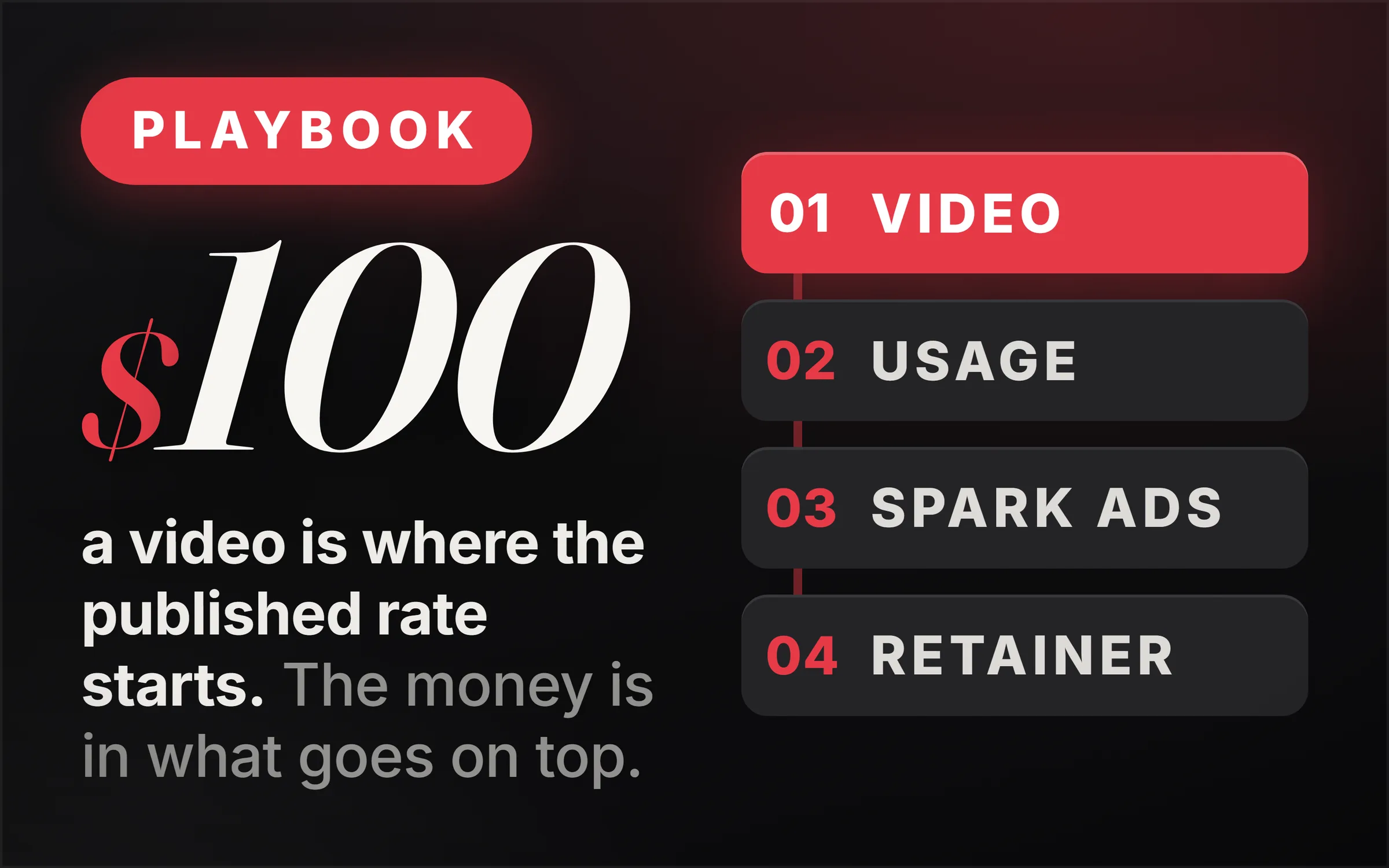
The published floor is around $100 a video. Insense states that "UGC campaigns start at $100 per video, with potential increases for work with a UGC expert or request of both raw and edited assets." Experienced creators charge several times that, and the price rises with the extras a brand asks for.
Three things move the price, and it is worth pricing each one separately rather than folding them into one number:
What goes on top of the video fee
- Usage rights. How long, and where, the brand may run your video as a paid ad. A video used organically for a month is worth less than one run as an ad for a year.
- Spark Ads on TikTok. TikTok describes Spark Ads as a format to "publish ads using organic posts made by other creators (with their authorization)". If the ad runs from your post, your authorization is a separate thing a brand is buying.
- Whitelisting. Letting a brand run paid ads through your own social account, usually charged monthly while it lasts.
Raw files, extra hooks (the same video with three different openings), and fast turnaround are the other common add-ons. Brands test several hooks to find the one that converts, so offering hook variations up front is both useful to them and an easy way to raise the order value.
Do you need followers to start?
No. Brands buy UGC to run from their own accounts, so a creator with 200 followers and a sharp portfolio is worth more to them than one with 20,000 followers and no ads to show. Followers matter only for whitelisting, where the ad runs through your account.
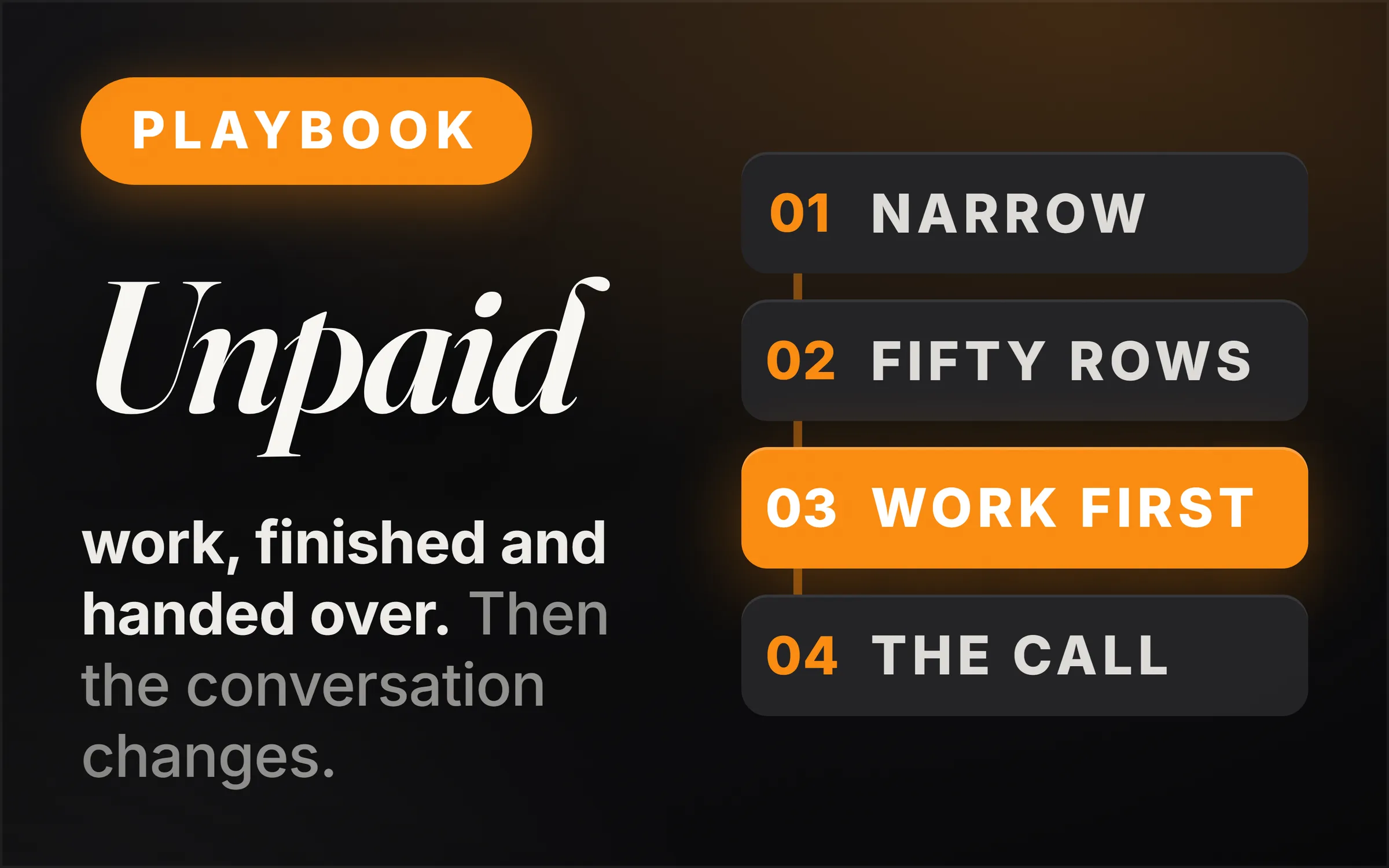
What you need instead is proof: two or three finished sample ads for real products. Pick products you already own, film them the way a paying brand would want, and you have a portfolio before your first client.
How do you get your first UGC client?
Make a sample ad for the brand before you pitch it, then send it to them. A short message with a finished video for their own product converts far better than "I'm a UGC creator, here is my rate card", because the brand is judging the work, not the promise.
There are two places to find brands, and they behave differently. Marketplaces (Insense, and others like it) bring brands to you but take a cut, which Insense publishes as 20%, 10% or 7% of creator payments depending on the brand's plan. Direct outreach to small brands already running ads on TikTok or Instagram keeps the whole fee and is where retainers usually come from. Most creators use a marketplace for the first reviews and direct outreach for the clients that last.
The approach of doing a piece of real work before anyone has agreed to pay is the same one we recommend for any service: see how to get your first client.
Can you do UGC without showing your face?
Yes. You can film hands, products and screens, use a voiceover, or generate the presenter with AI. Creatify, built for e-commerce video ads, has a free plan ("Create up to 2 video ads", watermarked), a Starter plan at $39 a month and a Pro plan at $99 a month, with AI actors and ad templates.
Faceless and AI UGC are best for volume and testing many hooks quickly. On-camera UGC still carries the most trust for products where a real person's reaction is the point, such as skincare, food and fitness. Many studios offer both.
How much does it cost to start a UGC business?
Close to nothing. A phone you already own, natural light and a free editing app are enough for on-camera work, and Creatify's free plan covers a first faceless test. Paid AI tools start at $39 a month on Creatify's Starter plan when you need watermark-free volume.
The real cost is time: learning what makes an ad convert, filming samples nobody pays for, and pitching. Budget the first two to four weeks as unpaid portfolio building.
How do you turn UGC into a real business?
Sell a monthly package instead of single videos. A brand that liked your first order usually needs fresh ads every month, because ads wear out as the same people keep seeing them. Offer a fixed number of videos a month, with hook variations and the usage they need, at one monthly price.
Then run it as a small studio rather than as one creator: a repeatable process from brief to delivery, a list of brands you pitch every week, and, when demand outgrows your own hours, other creators you brief and edit. That is the difference between a side income and a business.
Do UGC creators have to disclose that they were paid?
When you post the video on your own account, yes. The FTC's guidance is that "if there's a connection between an endorser and the marketer that a significant minority of consumers wouldn't expect and it would affect how they evaluate the endorsement, that connection should be disclosed clearly and conspicuously." Being paid or sent free product is that kind of connection.
When the brand runs the video as its own ad, the brand is the advertiser and is responsible for the ad. Agree in writing who posts what, and keep any claims in the script to what the brand can support.
The honest hard part
The entry is easy and that is the problem. Anyone with a phone can call themselves a UGC creator, so marketplaces are crowded at the bottom and brands receive a lot of forgettable videos. The creators who earn well are not the ones with the best camera. They are the ones whose ads sell, who can show it, and who price the extras instead of giving them away.
The second hard part is that per-video work never stops. Every month starts at zero unless you have retainers. Treat the first paid order as the start of a conversation about the next month, not the end of a job.