To grow a business from zero, fix three things that are rarely about the product. Build for a problem people are already in pain over, build an audience while you build the product rather than after, and make trust, research and community your edge, because anyone can copy the product itself in a weekend.
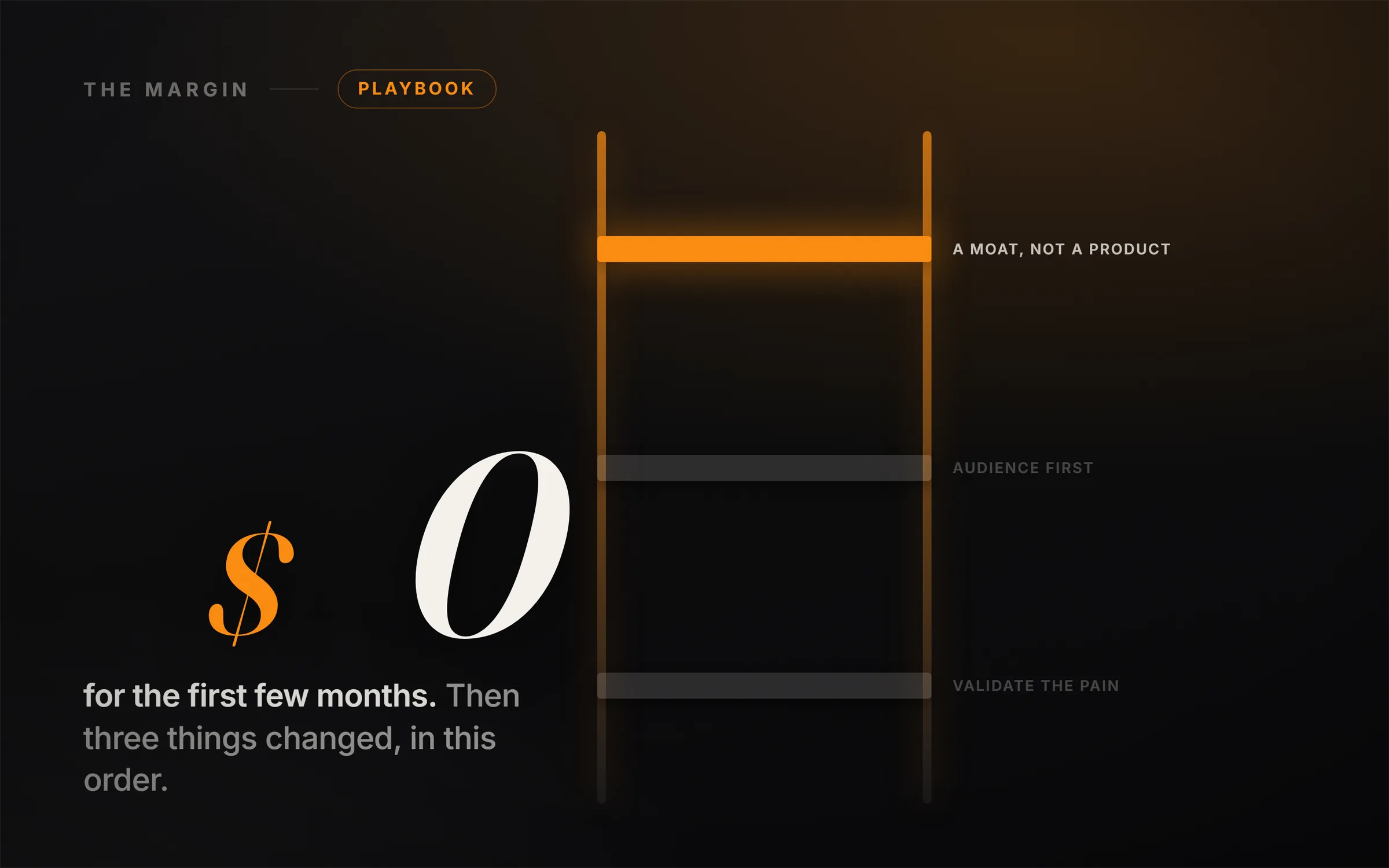
I have been building a website called ideasrepay.com. I worked hard on it. I was proud of it. And for the first few months, it made exactly zero dollars.
Not a slow trickle. Zero. The kind of zero that makes you quietly question whether the whole thing was a mistake. I had a finished product and an empty payment screen, and the gap between them felt like a wall I could not see through.
Then three things changed everything. Not a better idea, not faster building, not some growth hack. Three quiet things that had nothing to do with how the site was built and everything to do with whether anyone would ever pay for it. Since I understood them, it has been growing, new people sign up every day, and I get to help someone take a real step forward every day. I am going to give you all three, honestly, so you do not have to spend those zero months the way I did.
The video tells this story out loud, in my own voice. The written version below stands on its own and carries the full detail, plus the exact first move you can make this week. Read it, watch it, or both.
Why can a good product still make $0?
Because building it is the easy part. A good product still makes nothing if it solves a problem nobody is in pain over, launches to no audience, or can be copied in a weekend: the gap is demand, distribution and durability, not code.
Here is the honest part first. Building the website was the easy bit.
The three things I had missed had nothing to do with how it was built and everything to do with whether anyone would ever pay for it. That is the gap that keeps a good idea sitting at zero: a finished thing on one side, an empty payment screen on the other, and nothing connecting them. If your website gets no traffic and no sales even though you know it is good, you are almost certainly standing in that exact gap. It is not a code problem. Let me walk you across it three times.
What should you build to make your first sale?
The first thing I understood: build something people are genuinely in pain over, not something that is merely clever.
Early on, I was in love with what I was making. But being impressed and being in pain are two completely different things, and only one of them opens a wallet. People pay to make something that hurts stop hurting. Everything else is a nice-to-have they will admire and never buy. I had built something admirable. Nobody was hurting for it.
So I got specific about a real, recurring pain. People want to start a business, but they are buried in vague, recycled advice, with no way to tell what is actually real or worth their time. That pain is deep, it repeats, and people already spend money trying to escape it. That last part is the signal. If people already pay, badly, to solve something, the demand is real before you build a thing.
How to validate a business idea before you build
I did not have to guess that this pain was real, because I lived it myself. I felt it as an entrepreneur, and I heard the exact same thing from friends of mine who were just starting their own businesses, all of us lost in the same fog of recycled advice. When you feel a pain yourself and everyone around you feels it too, you do not need a survey. You already know.
So before you build, do what I wish I had done sooner:
- Pick one specific person. Not "small business owners." One person, with a name, a job, and a bad week you can picture.
- Pick one recurring pain they already spend money trying to fix. Recurring matters. A one-time itch is a project, a repeating one is a business.
- Find real people who will tell you, in writing, that they would pay to make it stop. Messages, replies, a pre-order, a deposit. Words are cheap, so look for the version of "yes" that costs them something.
If you can find those people, you have something. If you cannot, you just saved yourself months. That is the whole point of validation: it is not a hoop to jump through, it is the cheapest way to find out you are wrong before it gets expensive.
When should you start building an audience?
The second thing changed how I work completely: you have to build the audience while you build the thing. Not after.
This was my quietest, most expensive mistake. I assumed that if the product was good enough, people would simply find it. They do not. A great product launched into silence earns silence. Nobody was waiting for IdeasRepay, so the launch was not a launch, it was a whisper into an empty room. This is the real answer to "why does my website get no traffic." There is no audience because nobody built one on purpose, before the product was ready to receive it.
Distribution has to start before the code does
So here is the machine I built, plainly, because it is the answer. IdeasRepay's distribution is a content flywheel:
- There is a channel, Repay Media, where I give the real teaching away for free: full breakdowns of businesses you could build, a free course, short videos every week.
- There are dozens of in-depth articles written to be found by the exact people already searching for this. (This one is an example. So is the one you might read next.)
- Every piece teaches something genuinely useful and quietly points home for anyone who wants the full step-by-step.
And here is the part I want you to feel. This article, and the video above, this is the distribution. This is me building it, live, in front of you. I teach you something real and free, and a few of you will want to go deeper and come find the rest. That is not a trick. That is the whole model: give away the insight, and let the people who want the execution come to you.
So take the logic, whatever you are building. Pick a place you can already reach: a community you are in, a search people already type, somewhere your future customers gather. Show up and give value there before the product is even finished. Distribution is not something you add at the end. It has to start before the code does. Every single day now, new people sign up, and every single day we get to help someone take a real step forward. That is the flywheel actually turning, and it started spinning long before the product was done.
What is a small business's real competitive edge?
The third thing I understood came later, and it is the one that makes all of this worth doing: your real edge is never the thing itself.
Anything I make, someone can copy in a weekend. That used to scare me. What I learned is that a copy is only ever a snapshot of me on one day, and the real business is everything underneath it that cannot be photographed. For IdeasRepay, that underneath is real, and it is not one thing, it is three.
The research. The work itself is deeply, honestly researched: real sources, real numbers, cited, with hours of genuine research behind every walkthrough. You do not clone that over a weekend. A copycat can take a page, but not the homework behind it.
The trust. When I back a claim with a real research paper on screen instead of just shouting a number, people learn they can rely on me. A copycat can take my page, but never my reputation for doing the work.
The people. This is the part nobody can copy, and the part I care about most. It is me, and the people. I have personally trained people to run these businesses and walked them, step by step, to their first real wins. There is a whole community doing it alongside each other. There is a channel where I teach this every single day. And honestly, this is the part I love: sitting with someone, counselling them through it, and watching them actually make it.
A copycat can clone a product. They cannot clone a mentor who genuinely cares whether you succeed, a room full of people building right next to you, and a path that has already walked real people to the other side. That is the real moat: not the product, but the person, the people, and the path. And it compounds. It gets deeper and harder to catch every single week. That is why going narrow and deep is not a limitation. It is the whole advantage.
What ties the three changes together?
Looking back, all three are really one thing. I stopped being in love with what I was building, and fell in love with the person I was building it for.
The pain, the audience, the trust: every one of them points at the same place, a specific person you are determined to serve. Get obsessed with them, and all three fall into place. The product is just how you show up for them.
How do you start growing a business from zero this week?
You do not have to spend months at zero the way I did. Here is where I would start today:
- Name the one person and the one pain. Write it in a sentence: "I help [one specific person] stop [one recurring, expensive pain]." If you cannot fill the blanks, that is your first job.
- Get three real yeses in writing. Not "cool idea." A message that says "I would pay for that," ideally with a number attached. Three of those beat a hundred likes.
- Show up where they already are, now. One post, one comment, one helpful answer in a place your person already gathers. Start the audience before the product is done.
- Build the thing small and real. Ship the smallest version that makes the pain stop, then let the people you have already been helping be your first customers.
That is exactly where mine began. Not a better idea, and not faster building. Three quiet things I wish someone had told me at the start.
Come do it with us, not alone
These three took me from zero to something I am proud of, and I am still building it out loud. If any of this lit something up in you, this is exactly what I built IdeasRepay for.
It takes you from "I want to build something" to knowing the right thing to build and actually having it, done. It helps you discover the real opportunity that fits you, then hands you a click-by-click walkthrough that leaves you with a working business at the end, not an article about one. Right now there is a complete one for building a small software product without writing a single line of code: how to validate it before you build, how to build it, what to charge, and how to find your first paying people. You can open that live walkthrough here: The Vibe-Coded Micro-SaaS.
And you are not doing it alone. There is a community building alongside you, a channel where I teach this every day, and there is me, mentoring through it, the same way I have already walked real people to their first wins. It is done with you, not handed to you as a file and forgotten.
It is all at ideasrepay.com, if you want it. Go find the one person you would love to build for, and start before you feel ready. That is exactly where mine began.