Can a non-technical beginner start an AI receptionist business in 2026? Yes. The model is small and specific: you build an AI voice agent that answers the phone for local businesses, picks up every call day or night, books the job, and texts the owner a summary. You charge a one-time setup fee and a monthly retainer to run it. The build is no-code, and you can stand up your first agent for under fifty dollars.
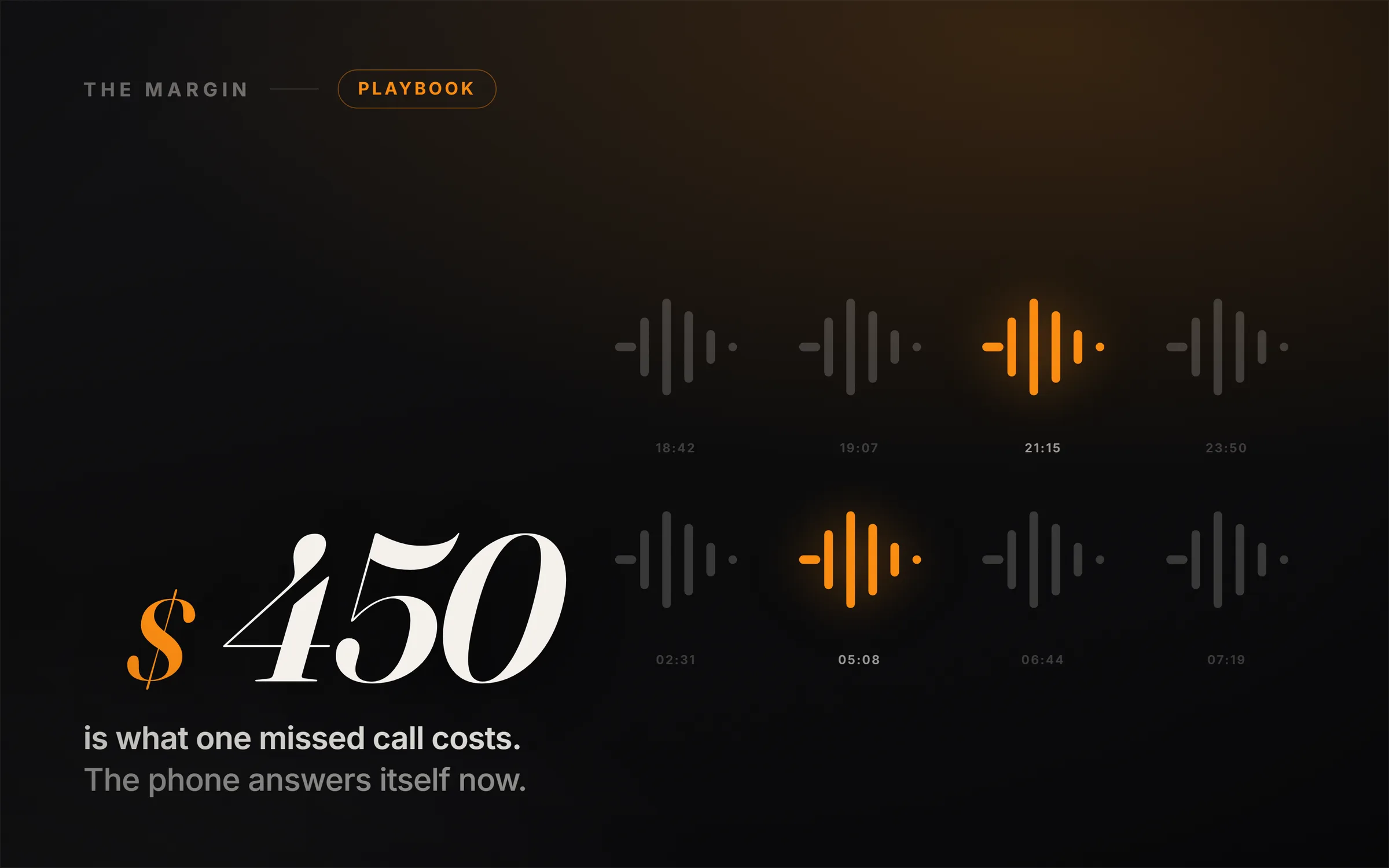
But the reason it sells has almost nothing to do with the technology. A missed call is the one leak a local business owner can actually see on their own numbers. That single fact is what makes this work when most "automate anything" pitches die in the inbox. Hold onto it, because it is the spine of everything below.
The video above is the fastest way to watch the whole model assemble in one sitting, including the real numbers one operator ran. The written breakdown stands on its own. Read it, watch it, or both.
What is an AI receptionist business?
An AI receptionist business is a service: you build and run an AI voice agent that answers the phone on behalf of a local company, then charge that company a recurring fee to keep it running. It is a focused, easy-to-explain version of an AI automation agency. Instead of selling vague "automation," you sell one outcome a business owner already understands, which is a phone that never rings out.
There is a distinction worth getting straight, because it changes who your customer is. Buying an AI receptionist is what the dentist or the plumber does. Building and running one for them is your business. Off-the-shelf AI answering tools exist and are getting cheaper, yet local owners overwhelmingly do not set them up themselves, for the same reason they do not do their own books or rewire their own van. The gap between "a tool exists" and "a slammed owner will actually configure it well" is the entire opening.
How much does an AI receptionist business make?
A single local client is typically worth a one-time setup fee plus a monthly retainer in the low thousands, often three to five thousand dollars a month once you are established. The retainer is the part that matters, because it recurs while the upkeep is a couple of hours a month.
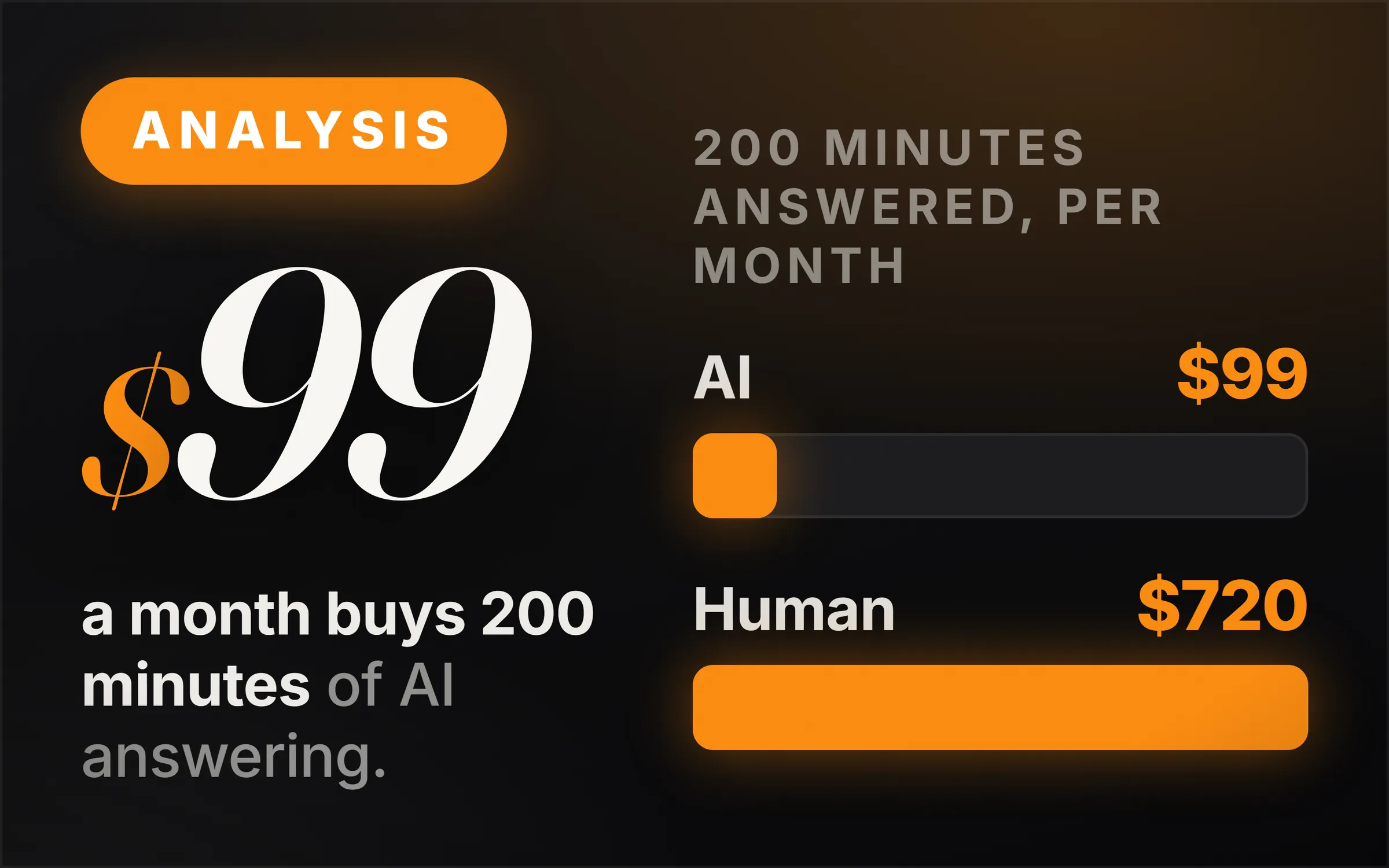
The reason an owner says yes is that the cost is visible on their side too. Published AI receptionist plans run from $79 to $249 a month, and 200 minutes from a human answering service costs $720, as we priced in how much does an AI receptionist cost. The owner sets that against what one booked job is worth to them. Missed-call statistics circulate widely in this market, but we could not trace the common ones to a primary source, so we leave them out. The honest pitch is to count the client's own missed calls with them first.
Stack the model and the numbers move fast. One client at four thousand a month is roughly forty-eight thousand a year. Three clients clears ninety. Five clients is around two hundred and forty thousand a year, which is what the operator in the video, a former retail manager with no coding background, reportedly runs on about twenty-five hours a week. Five clients is not five times the work of one. That gap, between revenue that stacks and hours that barely move, is the whole engine.
Do you need to know how to code?
No. The build is no-code. You connect blocks and write instructions in plain English, the same way you would brief a new receptionist on their first morning: here is what we do, here is what to say, here is when to flag me. If you can write a clear set of instructions, you can build the agent.
This catches people off guard, so it is worth saying plainly. The hard skill in this business is not engineering. It is translating a business owner's problem into a system and earning enough trust to get paid for it. The best operators in this space are not the most technical people. They are the ones who understand a local owner's day well enough to explain, in that owner's own language, exactly how much money the missed call is costing.
What does it cost to start an AI receptionist business?
Less than most people guess. Standing up and testing your first agent runs under fifty dollars, much of it on free tiers. Running it for a real client costs the underlying tools a few hundred dollars a month at most. There is effectively no inventory, no office, and no upfront capital beyond your own time spent learning the tools and doing outreach.
That cost structure is why the unit economics look almost unfair. You are charging a client a few thousand a month against a few hundred in tool costs, to stop them losing more than you charge. Shown on the owner's own numbers, it is one of the easier yeses in small business.
How do you get your first client?
Not with a pitch. You get the first client by removing the risk from their side of the table entirely. A brand-new operator with no portfolio cannot ask a skeptical owner for a leap of faith, so you do not. You offer to prove it before they pay anything, on their actual phone, with their actual calls.
This is the honest hard part, and it is where the months go. The building is the easy twenty percent of this business. You can learn it in a weekend. Getting clients and earning their trust is the other eighty percent, and it is real work, not a trick. The good news is there is a clean, repeatable move that lets a beginner land a first paying client without a track record. Naming it is simple. Running the exact sequence well, the one that turns a free pilot into a multi-year retainer, is the part worth doing carefully. That sequence, with the real tool stack and the plain-English instructions per business type, is exactly what our AI automation agency walkthrough lays out end to end.
The general version of that move, the one that works whatever you sell, is written up separately in how to get your first client without asking for one, with the exact words for the message, the call and the price.
Is it too late to start an AI receptionist business in 2026?
No. You are early. The strange truth is that this business only became buildable recently, when three things crossed a line at once. Voice AI got good enough that many callers cannot tell. The tooling went fully no-code, so what used to need engineers you now assemble in an afternoon. And every local owner has heard of AI and feels they should be using it, while having no idea how. High pressure, zero ability. That gap is the opportunity, and most people have not started.
It helps to be clear about where the real advantage sits now, because it is not the tooling. As we argued in The Moat Moved, knowing how to drive AI stopped being an edge the month everyone learned it. What is left, the part that actually separates operators, is trust, relationships, and the judgment to solve a specific problem for a specific buyer. None of that was ever gated behind a technical skill, which is precisely why a determined beginner can win here.
Is the "AI agency" thing a scam?
A lot of the loud "start an AI agency" noise online is junk, people selling courses about a business they have never run. That part is fair to be suspicious of. But the business underneath is completely real, because the problem is real and measurable. Missed calls cost local companies money every single day, in every town, and that does not depend on anyone's marketing.
The deeper point is what a client is actually paying you for, and it is not the software. They are paying for a person who understood their problem, made the judgment calls, and stands behind the result when something goes wrong. That is the human layer on top of the machine, and it is the part buyers reliably pay extra for once the cheap version is everywhere. A faceless tool cannot be held responsible. You can. That accountability is a feature, not a footnote.
Why do most AI agencies fail?
Here is the original lesson buried in all of this. Most "AI automation agency" advice tells you to automate anything for anyone, and that breadth is exactly why it fails. A general promise to "save you time with AI" is invisible to a busy owner, because they cannot see it on a statement. The missed call is different. It is the rare automation a local owner can price on their own books, which is why this narrow version of the business converts when the broad one stalls.
So do not sell a technology. Sell a number. Walk in already knowing what one missed emergency costs the plumber down the road, and the conversation is half won before you mention AI at all. The tools are the easy part. The number is the business.