What is an AI automation agency?
An AI automation agency is a small service business that builds AI systems for other businesses and is paid every month to keep them running. The most common version answers a local business's phone with an AI voice agent, books the caller into the calendar and texts the owner a summary, for a setup fee plus a retainer of $300 to $5,000 a month depending on scope.
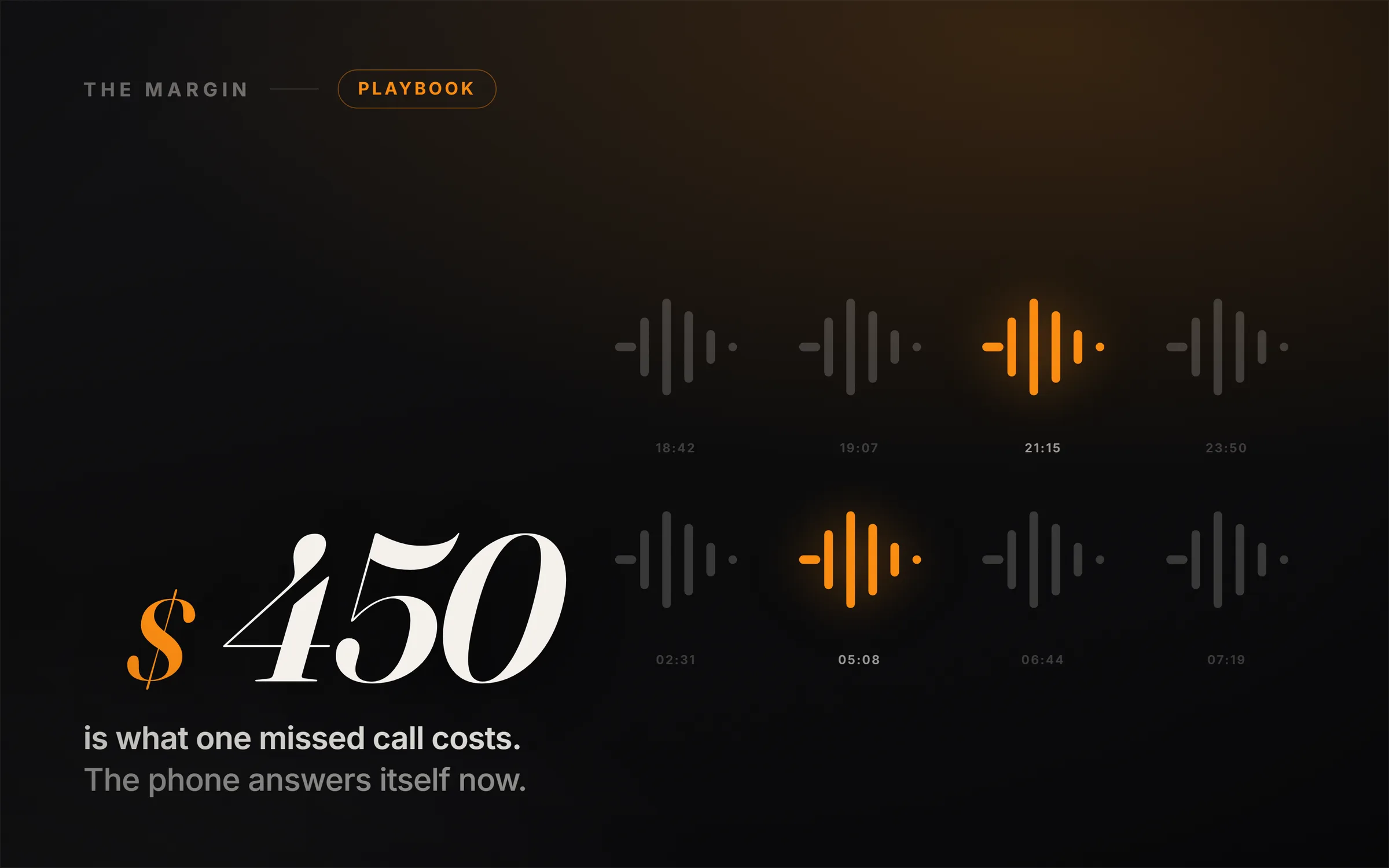
The customer is a business that loses money every time its phone rings out: a dental clinic whose front desk is with a patient, a plumber who is under a sink, a salon after closing time. Most callers who reach voicemail do not leave a message. They call the next business on the list. You sell the fix for that, and you sell it as an outcome, not as software.
How much does it cost to start an AI automation agency?
Under $50 to build and test your first demo. A no-code automation platform, a voice AI platform and an AI model all have free tiers or trial credits that cover a first build, and a phone number costs about $2 a month. Which tools to pick, and when to pay for an upgrade, is set out in the walkthrough.
The costs that matter come later and they move with each client. Advertised voice prices of a few cents a minute become about $0.15 to $0.30 a minute once speech recognition, the voice and the phone line are added, so a busy client costs you more. That is why every contract should include a set number of minutes with a rate above it. The full arithmetic of one client, including what it costs to find them, is in is an AI automation agency profitable?
What are the steps to start an AI automation agency?
There are 7 steps, in this order. The order matters more than the tools: most people who fail at this business spend their first month on the build and their savings on software, then discover the bottleneck was always the first client.
Step 1: Pick one niche you can reach this week
Choose one type of business, not "local businesses." A single niche lets you reuse the same build, speak the trade's language and get referred inside it. A good test is whether you can name ten businesses in that niche you could contact this week.
The walkthrough teaches two niches because they are the two shapes this business takes. A dental clinic is the appointment shape: the agent books, answers insurance and hours questions, and sends reminders that cut no-shows. A plumbing company is the emergency shape: the agent decides whether the call is urgent, captures the address and alerts the owner within seconds. Almost every other local business is a blend of the two, from salons and law firms to HVAC and electricians.
Step 2: Build a demo agent on free tiers
Build one working agent for yourself before you speak to a single business. It should answer a call, handle the common questions, book an appointment into your own Google Calendar and text you a summary. For most people that takes a weekend, and the second one takes an afternoon.
You will not write code. The agent's behaviour comes from a system prompt, which is a set of plain-English instructions like the briefing you would give a new receptionist: who it is, what the business does, how to answer the common questions and when to hand over. The connections between the agent, the calendar and the text message are dragged together in a visual builder.
The build guide and copy-ready promptsThe AI Automation AgencyStep 3: Test it until it fails safely
Call your agent dozens of times. Ask normal questions, then strange ones, then try to confuse it. Book an appointment, cancel it, call after hours. Each failure is a line to add to the prompt. This testing loop is most of the real build.
Then add guardrails: what the agent does when it does not know something, how it handles an angry caller, and when it hands the call to a human. An agent that handles the routine 80% of calls well and passes the rest on cleanly is worth paying for. An agent that invents a price once loses the client.
Step 4: Find prospects with the call that rings out
The strongest opening in this business is a fact the owner cannot argue with: their own phone ringing out. A business that missed your call has already shown you the problem you solve, so your first message is a result, not a pitch. The scripts for that first call, email and follow-up are in the walkthrough's outreach kit.
Expect volume. Instantly's 2026 cold email benchmark puts an average campaign at about 7 meetings per 1,000 emails, with about 7.5 touches to reach a meeting over three to four weeks. Walking in, calling and personal emails all beat templates, because these are local owners who can tell when a message was written for them. More on the first client is in how to get your first client.
Step 5: Run a free one-week pilot
Do not pitch a contract to a business that has never heard of you. Offer to build their agent and run it free for one week, alongside their current setup. Your cost is close to zero on free tiers. Their risk is zero. That imbalance is what gets a yes from a stranger.
During the week, write everything down: calls answered, calls that came in after hours or while the line was busy, appointments booked, leads captured. Those numbers are the whole sales argument in the next step, and a pilot without them is wasted.
Step 6: Turn the pilot into a retainer
At the end of the week, sit down with the owner and show them what happened, in their money: the calls it answered, the ones that came in after hours or on a busy line, and the appointments it booked. Then name the price to keep it running. You are not persuading anyone at this point. You are showing them calls they were losing and have stopped losing.
The price is a one-time setup fee plus a monthly retainer, anywhere from about $300 a month for a simple agent to $5,000 a month for a full system. The walkthrough sets out the exact tiers, what goes in each, and the ROI calculator and closing conversation that get the owner to yes. Always sell the retainer. A one-off build is one payment; the retainer is the business. More on pricing is in how much to charge for AI services.
Step 7: Keep the client with a monthly report
A working agent becomes invisible. In month one the owner remembers the missed calls; by month nine the phone has always been answered, and a line item for something that never fails starts to look like an unused subscription. Send a short report every month that puts the caught calls and booked jobs back in front of them.
Retention is where the money compounds. Focus Digital's 2026 agency churn report puts retainer agencies at 18% annual churn and an average client lifespan of 56 months, against 24 months for project work, and notes that agencies paid to execute rather than advise lose clients faster. A stable system takes two to four hours a month to look after: reading transcripts, adding answers the agent got wrong, updating hours and services.
How long does it take to get the first client?
On the walkthrough's month-by-month markers, about 3 months. Month one goes on learning the tools, building and testing your own agent, choosing the niche and sending the first outreach. Month two is the first free pilot for a real business. Month three is the first paid retainer, and with it the first case study with real numbers.
That third month is the hardest stretch: a lot of effort, one client, and a business not yet proven even to you. It gets faster from there, because the second pitch has numbers in it and the third client often comes as a referral from the first.
How much can an AI automation agency make?
One retainer at $2,000 a month is $24,000 a year, and five at $3,000 is $15,000 a month in recurring revenue, before setup fees. The walkthrough's month-by-month markers put five to eight clients at months eight to twelve for someone working steadily at it.
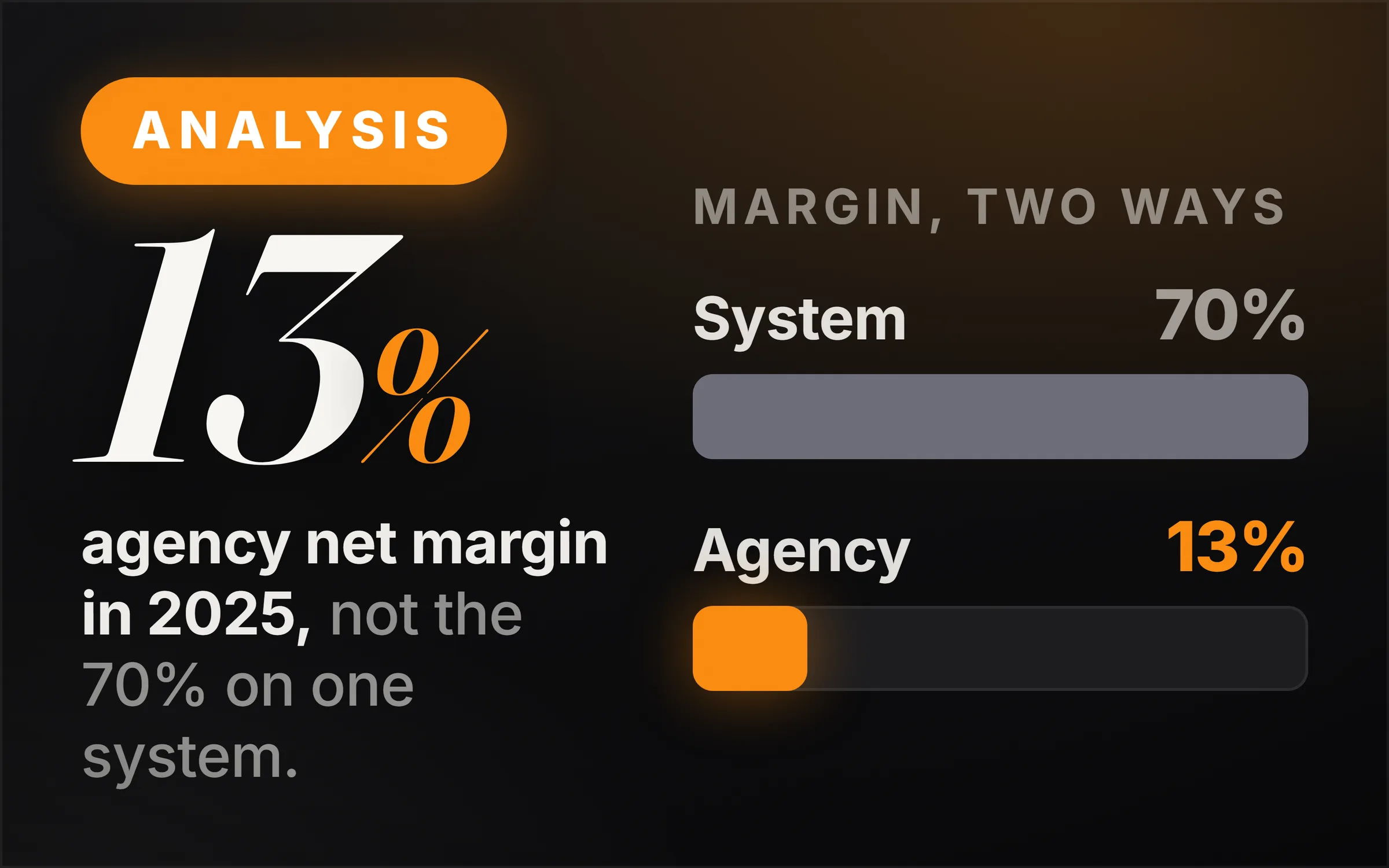
Treat profit separately from revenue. The 60% to 80% margin often quoted for this business is the margin on one running system. Promethean Research's survey of 119 digital agency owners found an average net margin of 13% for 2025, after the cost of finding clients, keeping them and paying for your own time. Firms that cut their service list down posted 30%. Fewer services, sold well, is the profitable version of this business.
Do you need to know how to code to start an AI automation agency?
No. The voice platforms, Make.com and the calendar connections are all visual, no-code tools, and the agent's behaviour is written in plain English. What the business actually rewards is persistence and plain speaking: testing until the agent works, explaining the result in a plumber's terms, and answering fast when a client calls.
When a client asks something technical you cannot answer, "let me check and come back to you today" is a complete, professional reply. The platforms have documentation and communities, and most questions have been answered before.
What mistakes should you avoid when starting an AI agency?
These 4 mistakes sink most new agencies:
- Paying for premium tools before the first client. Build on free tiers and upgrade with client money, never your own.
- Underpricing the first client. A $200 retainer attracts the wrong client and is very hard to raise later. Price on the money the system catches, not on your hours.
- Selling the technology. Owners do not care which model or platform you use. They care that the phone is answered and the calendar is full.
- Skipping the pilot numbers. If you do not count the calls caught during the free week, you have nothing to close the retainer with.
Before you start, read the honest numbers, including which of the seven services sold under this name are now priced by software vendors, in is an AI automation agency profitable?, and compare it with the other businesses in profitable business ideas for 2026.