If you run a business channel, most YouTube advice is being written for somebody with a different business model to yours. A creator living on ad revenue is selling audience size. You are selling a thing with a price on it, and that single difference flips the meaning of at least five of the numbers in your Studio dashboard, including the one everybody leads with.
This page is a glossary sorted by that difference. Twelve terms, what each one means, what YouTube itself actually publishes about it, and what changes in your business once you know. Where YouTube publishes no figure, this page says so instead of repeating somebody's average as though it were a standard.
The film runs all thirty-nine terms in six chapters, each chapter a question rather than a category. This page is the twelve that change what a business does on Monday.
Why is RPM the wrong number if you sell something?
Because it prices a view as a fraction of a cent, and for you a view is a fraction of a customer.
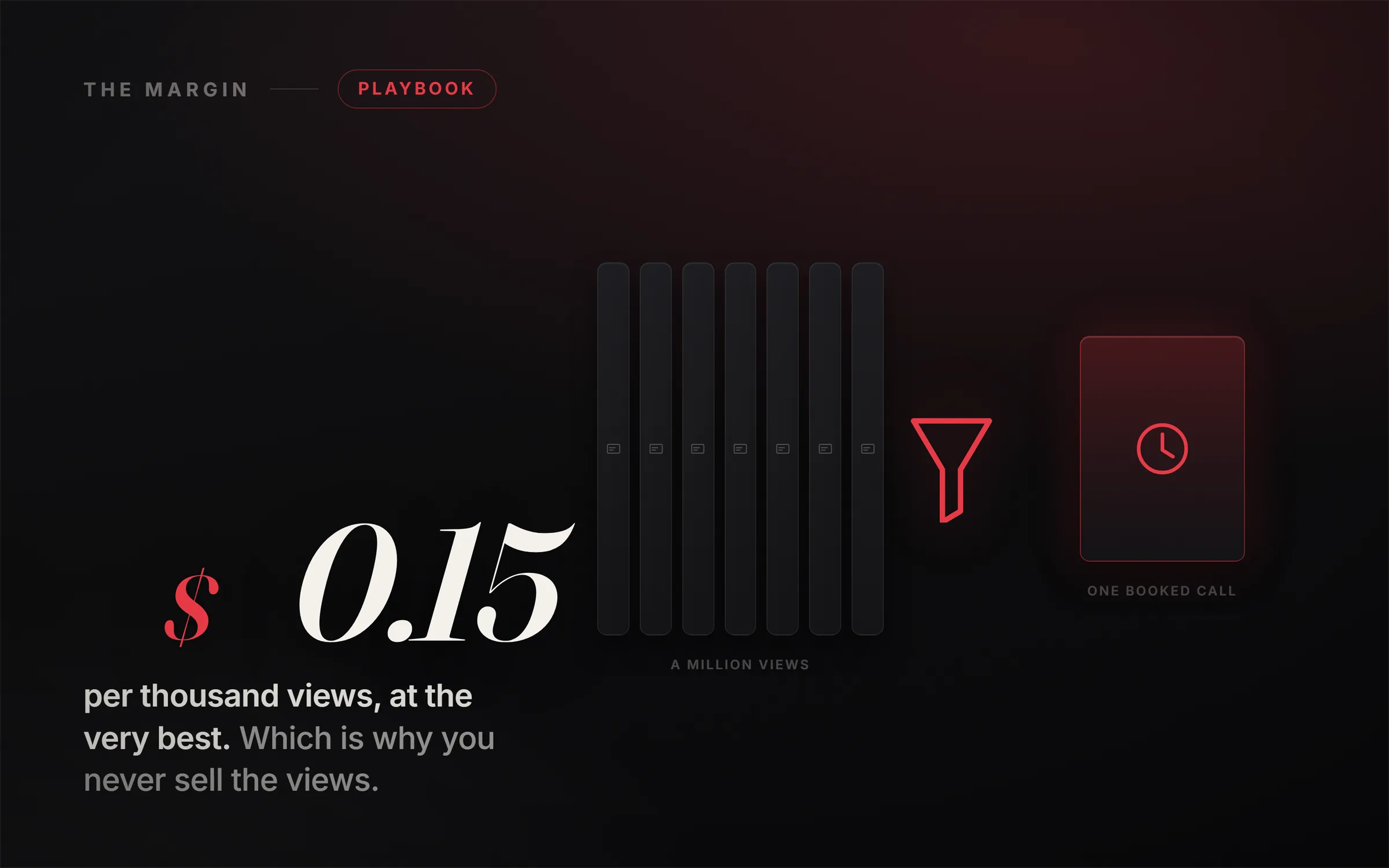
RPM is YouTube's term for how much money you earned per thousand video views. It includes everything, not only advertising, so channel memberships, YouTube Premium revenue, Super Chat, Super Stickers and Super Thanks all sit inside it, and it is counted after YouTube's share has been taken. It is also divided by all of your views, including the ones that were never monetised, which is why it looks lower than people expect and why it is the honest figure.
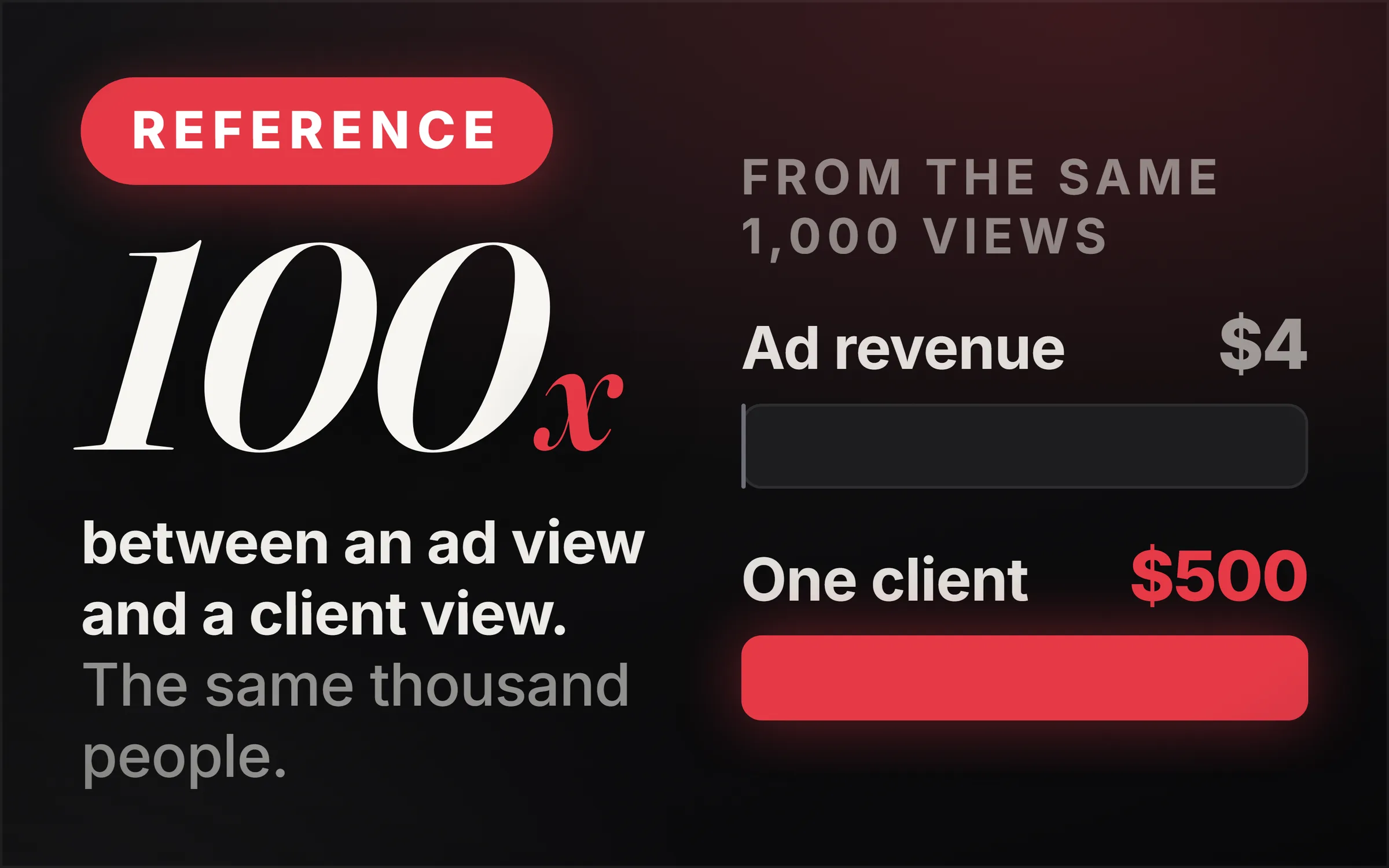
Now do the arithmetic that matters. Somebody selling a five hundred dollar service does not care that their RPM is four dollars. A thousand views at four dollars is four dollars. A thousand views that produce one client is five hundred. Those are the same thousand people, and the two answers are more than a hundred times apart.
RPM keeps a place on your list for exactly one reason: it is the only number YouTube gives you that reflects what advertisers believe your audience is worth. A rising RPM across your subjects is a rough independent read on whether you are reaching people with money to spend. Use it as a signal about your audience, never as a scoreboard.
The same logic runs through CPM, which is what advertisers spend to show ads, counted before revenue share rather than after. A high CPM on a subject means advertisers are competing to reach the people watching it, and advertisers do that research expensively. That is free validation of an audience you were considering.
Which YouTube benchmarks did YouTube never actually publish?
Four of the most repeated ones, and this is the most useful thing on the page, because each is quoted with a confidence nobody has earned.
There is no benchmark RPM. No official figure, no official range, no table by country or by subject. Every RPM number you have seen in a thumbnail came from one person's channel and is a fact about their audience, not about the platform.
There is no pass mark on the thirty second cliff. The marker is real: Studio names a key moment called the intro and defines it as the percentage of your audience still watching after the first thirty seconds. But YouTube attaches no threshold to it. The figures you hear, sixty percent being healthy and below fifty needing a rework, come from creators and consultants. They are reasonable working targets. They did not come from YouTube.
There is no published velocity rule. YouTube's own explanation of how recommendations work does not mention early view velocity. It describes no window of hours or days, no test audience, and says nowhere that a slow start harms a video. What it describes instead is the viewer, their history and their feedback.
"Valued watch time" is not YouTube's phrase. It is repeated everywhere as though it were official and it does not appear in YouTube's description of how recommendations work.
One benchmark on this subject genuinely is published, and it is worth hearing precisely because it is so rare: half of all channels and videos on YouTube have an impressions click-through rate that can range between two and ten percent. That is a spread, not a target, and the half of the platform sitting outside it is enormous.
The decision the velocity finding drives is a decision not to act. Do not delete a video because its first day was quiet, do not unlist it, do not re-upload it, and do not change the title in a panic six hours in. Each of those is irreversible, made on a rule nobody has ever published, and each costs you the one advantage a business video has, which is that it can keep selling for years.
What is a good YouTube click-through rate?
YouTube states that half of all channels and videos have an impressions click-through rate between 2% and 10%. Read views against impressions: few impressions is a distribution problem, and many impressions with few views is a packaging problem.
An impression is one time your thumbnail was shown to somebody on YouTube, and the definition is strict. The thumbnail has to be at least half visible and sit there for more than one second, or it does not count. External websites and apps, the mobile website, YouTube Kids, YouTube Music, cards and end screens inside the player, and notification or email impressions register nothing at all.
That gives you the first useful habit in analytics: stop reading views on their own and start reading views against impressions. Two videos with the same disappointing view count are usually two completely different problems.
- Almost no impressions. YouTube never showed it to anybody. A distribution problem, which lives in the idea.
- Plenty of impressions, few views. It was shown and refused. A packaging problem, which lives in the title and thumbnail.
You cannot repair either until you know which you have.
Click-through rate is one divided by the other, and the counterintuitive part is that it falls when things go right. The number moves with how far outside your own audience YouTube is pushing the video, so a thumbnail shown to strangers converts worse than the same thumbnail shown to people who know you. A video that starts genuinely travelling will watch its click-through rate drop while its views climb.
For a business there is a version of that trade worth taking on purpose: a lower click-through rate from the right people beats a higher one from the wrong people. A title that filters out everybody who will never buy from you is doing its job even while it lowers the number.
Which traffic source is worth the most to a business?
Search, by a distance, and the reason is that the viewer arrived with a sentence already in their head. That sentence is usually a problem, which makes search the only source where traffic is qualified before it reaches you.
The other two behave differently in ways that decide what you do next. Browse features covers the home page, subscriptions, Watch Later, Trending and Explore, and a browse viewer was not looking for anything. They chose your thumbnail out of a grid, so browse is won and lost almost entirely on the idea and the packaging. You cannot aim at browse with keywords, and a lot of wasted effort goes into trying. Suggested traffic comes from a video, and that video is very often not one of yours, so you are inheriting attention rather than competing for it.
The timing is where search separates. Browse and suggested traffic arrive quickly and then stop. Search traffic starts slowly and accumulates, sometimes for years.
So judge a search video on its third month, not its third day, and never delete one for a soft opening. It is the only kind of video that gets better while you sleep.
What is session time, and why does it live in your last thirty seconds?
Session time is the one term here you cannot look up in your own analytics, because Studio does not report it. It is real anyway, and it comes from the most consequential thing YouTube has ever published about its own system.
In August 2012, YouTube announced it was moving discovery away from views. Their discovery features, they wrote, had previously been designed to drive views, and this rewarded videos that were successful at attracting clicks rather than videos that actually kept viewers engaged. Then the sentence everything since has been built on: they are optimising for how a video contributes to a longer viewing session on YouTube.
A longer session, not a longer video. Part of your video's value to YouTube is decided by what the viewer does after it ends, which is something you can influence and almost nobody bothers to.
Every conclusion you have ever recorded is a signal that the session is finished, and viewers act on it. You hold three levers over what happens next and no others: replace the conclusion with a bridge into a specific next video, put that video on the end screen, and keep your playlists real rather than decorative.
What does YouTube's audience overlap report tell you?
Audience overlap is the report YouTube calls "other channels your audience watches," and it sits in the audience tab. The definition is what other channels your viewers consistently watched outside your channel over the past twenty-eight days.
The common mistake is reading it as a competitor list. It is not. It is a map of what the people you already have care about when they are not watching you, which makes it the cheapest customer research you will ever get, because it is behavioural rather than declared.
And it answers the question that outranks every view count. If you sell to operations managers and your overlap list is full of channels operations managers watch, the funnel is pointed at the right people. If you sell a professional service and your overlap list is full of channels about making money online, you have built an audience of people who want your job rather than your work, and no amount of extra reach repairs that.
It is uncomfortable to look at, and it is the single most useful screen in Studio for anybody selling something.
What is a topic ceiling on YouTube?
The topic ceiling is the largest audience that could possibly want the video you just made, and it is fixed before you press record. A beautifully made video about a narrow subject cannot beat an average video about money, because there are only so many people alive who care about the narrow subject.
For a channel living on advertising, a low ceiling is fatal, because the money is the audience size. For a funnel it can be ideal.
If you sell a five thousand dollar service to operations managers in manufacturing, there may only be a few thousand of them in your market. A video reaching four hundred of them is a better quarter than one reaching two hundred thousand people who will never buy anything.
So the ceiling question for a business is not how many people could want this video. It is how many buyers could want it. The honest failure is not a small audience. It is a large one made of the wrong people, which costs exactly as much to produce and returns nothing.
The same inversion applies to subscriber conversion. Studio does not calculate a conversion rate for you, so it is arithmetic you do yourself, and the raw counts lie constantly. A video with fifty thousand views and eighty subscribers converted far worse than one with two thousand views and forty, and only one of those looks like a success at a glance. The low-view, high-conversion video is the one to make again, because the hard part is already solved and the only thing missing is distribution.
What are the YouTube Partner Program requirements, and what changes in 2027?
Full monetisation needs 1,000 subscribers plus either 4,000 public watch hours in 12 months or 10 million Shorts views in 90 days. From 1 February 2027 the watch-hour route doubles to 8,000 hours for new applicants.
There are two doors, not one, and one of them moves on a specific date.
The fan-funding door. Five hundred subscribers, three valid public uploads in the last ninety days, and then either three thousand qualified watch hours in the last twelve months or three million qualified Shorts views in the last ninety days. That unlocks memberships, Super Chat and Super Stickers, Super Thanks and shopping features.
The ad-revenue door. One thousand subscribers, and then either four thousand qualified watch hours in the last twelve months or ten million qualified Shorts views in the last ninety days.
Starting 1 February 2027, the entry thresholds for new creators change to eight thousand qualified watch hours in the last three hundred and sixty five days, or twenty million qualified Shorts views in the last ninety days, still alongside a thousand subscribers. The watch-hour requirement doubles and the Shorts requirement doubles with it. There is a second date next to it that is easy to miss: creators have to review and accept the updated terms in YouTube Studio by 31 January 2027 to continue full monetisation.
Then the exclusions, which catch businesses specifically. Private, unlisted and deleted videos earn nothing toward qualified watch hours, including hours a deleted video had already banked. Watch time from ad campaigns does not count, so paying to promote a video moves you not one minute closer. And Shorts do not count toward the watch-hour threshold at all.
Unlisted is exactly where companies put client walkthroughs, onboarding videos and webinar recordings, and every one of those earns nothing.
The decision for a funnel: clear the threshold, because ad revenue on an asset you were building anyway is money for no extra work. But do not let it change what you make. The fastest route to four thousand hours is long videos aimed at the widest possible audience, and that is precisely the audience that will never buy anything from you.
What does YouTube's inauthentic content policy prohibit?
Mass-produced, repetitive content without real authorship, not AI itself. YouTube renamed the policy from repetitious content to inauthentic content on 15 July 2025.
This one has caused more panic than anything else on the list and been read more carelessly than any of it.
First, where it lives. It is a monetisation policy, not a community guideline, so it sits in the YouTube channel monetisation policies. On 15 July 2025 YouTube posted in that page's update log that they were making a minor update to their repetitious content policy to better clarify that it includes content that is repetitive or mass produced, and renaming it from repetitious content to inauthentic content. They added that this type of content has always been ineligible for monetisation, and that there is no change to the reused content policy covering commentary, clips, compilations and reaction videos.
Most of the panic disappears inside that paragraph. It was a rename and a clarification of a rule that already existed.
What it prohibits is set out in the section: channels where content feels interchangeable from video to video, content that appears to be produced using a template, or where each video does not deliver creative, educational or other value. The AI example is exact, naming AI-generated content made with generic or unoriginal templates, giving the impression of mass production, without adding the creator's original insights or perspective.
What it does not prohibit is written just as plainly, and that half never gets quoted. The same intro and outro on every video is fine as long as the bulk of your content differs. A series following characters across episodes, or a channel doing product reviews, is fine as long as each video has a distinct storyline, focus or concept.
The policy was never about tools. It turns on two words, original and authentic, and the working test is whether somebody could tell your videos apart. This is the live risk for any business scaling video with automation, because the obvious way to make sixty videos about sixty service areas is one template with the place names swapped, and that is the exact thing described.
Is a Content ID claim the same as a copyright strike?
A Content ID claim is not a copyright strike, and YouTube says so directly. A claim is automatic: the system matched something in your video against a file a rights holder uploaded, and that holder decided in advance what happens on a match. They can block the video, monetise it, or simply track its viewership statistics. The line worth memorising is YouTube's own: Content ID claims affect videos, but usually do not impact your channel or account.
A copyright strike is a legal event. A removal request was found valid and the video came down. It expires in ninety days if you complete Copyright School and the channel has fewer than three strikes, and three strikes in ninety days are subject to termination along with associated channels.
People delete a video the moment a claim appears. Deleting does nothing about the claim and permanently destroys an asset that was still bringing people in. A claimed video that somebody else is monetising still ranks, still gets suggested and still sells for you.
Made for kids is not a genre setting. YouTube requires the declaration under an agreement with the United States Federal Trade Commission, to help you comply with the Children's Online Privacy Protection Act, and the setting turns off far more than advertising. On content marked made for kids, YouTube disables comments, the notification bell, cards and end screens, channel memberships, Super Chat, merchandise and ticketing, live chat, autoplay on home, and both save to playlist and save to Watch Later. On a channel marked made for kids you also lose posts.
Read that list as somebody with a funnel. No comments, so no conversations and no social proof. No cards or end screens, so no route out of the video. Nothing saved and no notifications, so no return visit. Marking a channel made for kids does not restrict the funnel. It removes it.
Community Guidelines strikes are a separate system from copyright strikes and do not interact with them. The first violation is typically a warning that expires after ninety days if you take the optional policy training, and that training is offered exactly once. Each strike then runs its own ninety days from the day it was issued, which is the detail people get wrong. They do not all clear together.
What is an attribution window, and why does it matter?
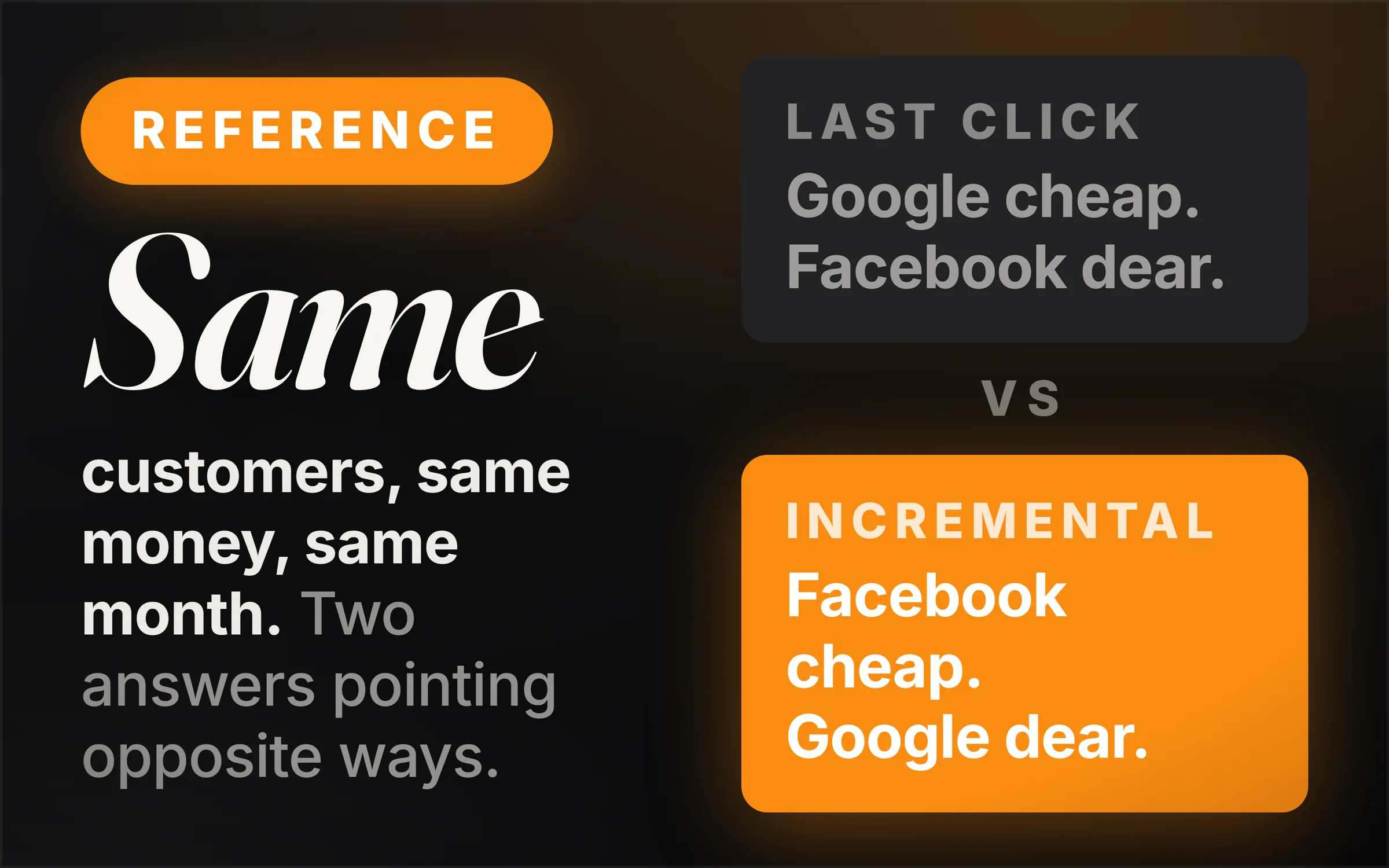
An attribution window, which Google calls the conversion window, is the period after somebody interacts with an ad during which a resulting sale still gets credited to it. The defaults matter far more than the definition.
A click-through conversion is credited for thirty days by default. An engaged-view conversion, which is what video actually produces most of, defaults to three days. A view-through conversion is one day. The advertiser can set it anywhere from one to ninety days, and Google recommends at least seven. An engaged view qualifies at ten seconds on a skippable in-stream ad and five seconds on an in-feed or Shorts ad.
Now the part likely to be costing somebody money right now. If your sales cycle is six weeks and your conversion window is three days, your reporting will tell you that video does not work for your business, and it will be wrong. The customer who watched, thought about it, spoke to a colleague and came back a month later is invisible to a window that closed on day three.
Set the window to the length of your actual sales cycle before you judge any of the numbers. And if you are on the other side of the table being paid on performance, ask which window the deal is measured on before you agree, not when the report arrives.
Which YouTube report should a business build for itself?
Every metric above is a fact about attention. None of them is a fact about revenue, and no screen in Studio joins the two.
So keep the list yourself. Every time a video produces a conversation, an enquiry, a call or a sale, write down which video it was. That list will be short, it will not correlate neatly with your view counts, and it is the most valuable document in the business, because it is the only one that tells you which videos to make again.
The related rule is to change strategy only on an outlier. Most videos are not feedback, they are your baseline repeating. If your normal video does two thousand views, one that does two thousand four hundred taught you nothing. And be careful which kind of outlier you are reading: a video that broke your baseline on views tells you something about packaging, while a video that broke your baseline on enquiries tells you something about your customer. They are rarely the same video.
If you want the neighbouring glossaries, we have every AI term explained with its source and the startup finance terms that cost founders money. If the live problem is turning the views into conversations, start with how to turn shorts into clients and reviving a dying YouTube channel.