You start a lawn care business by selling recurring weekly or fortnightly cuts inside one tight neighbourhood, not by buying a trailer and taking whatever calls come in. The equipment question is trivial and the route question decides whether the business works, and almost every guide has that the wrong way round.
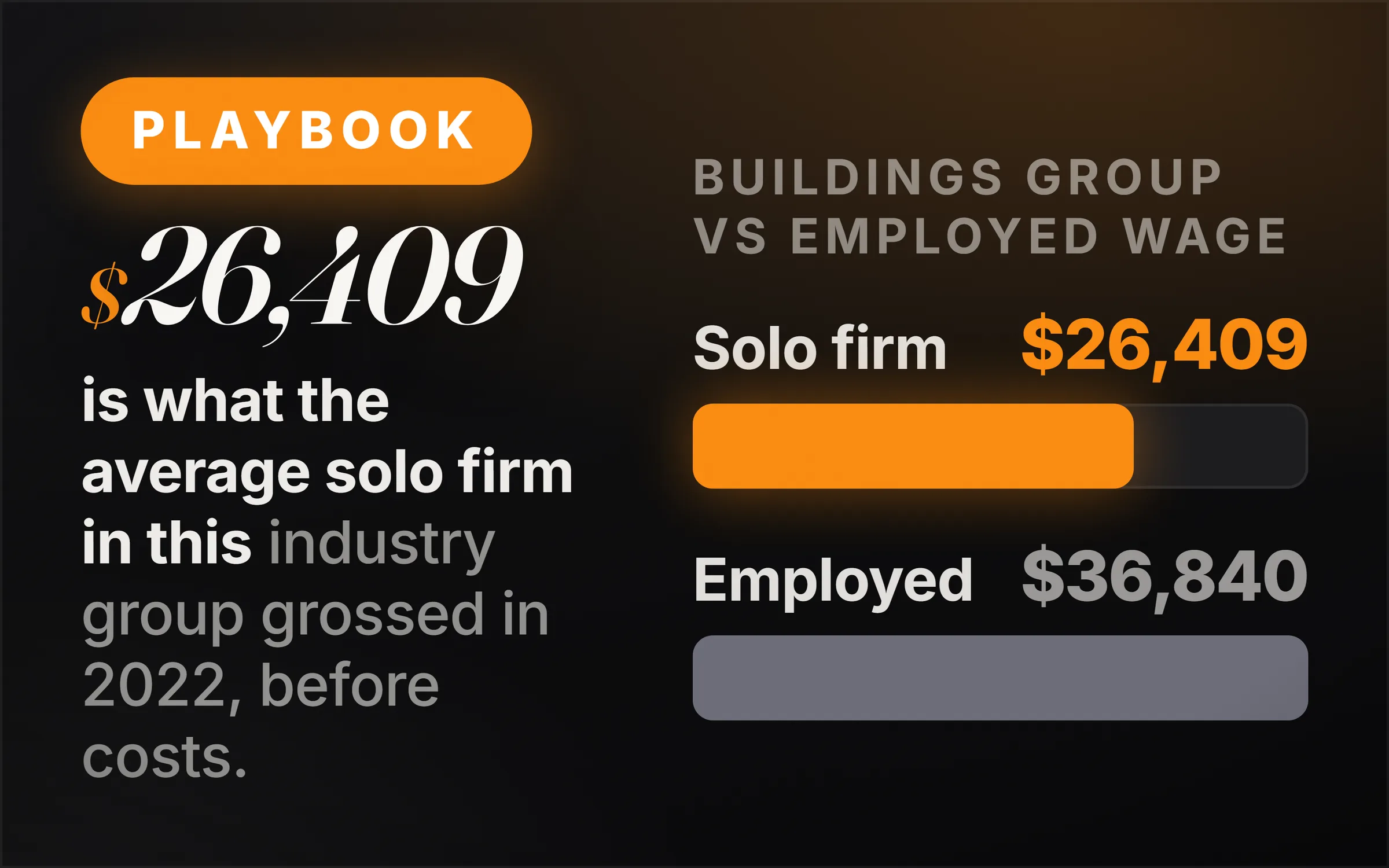
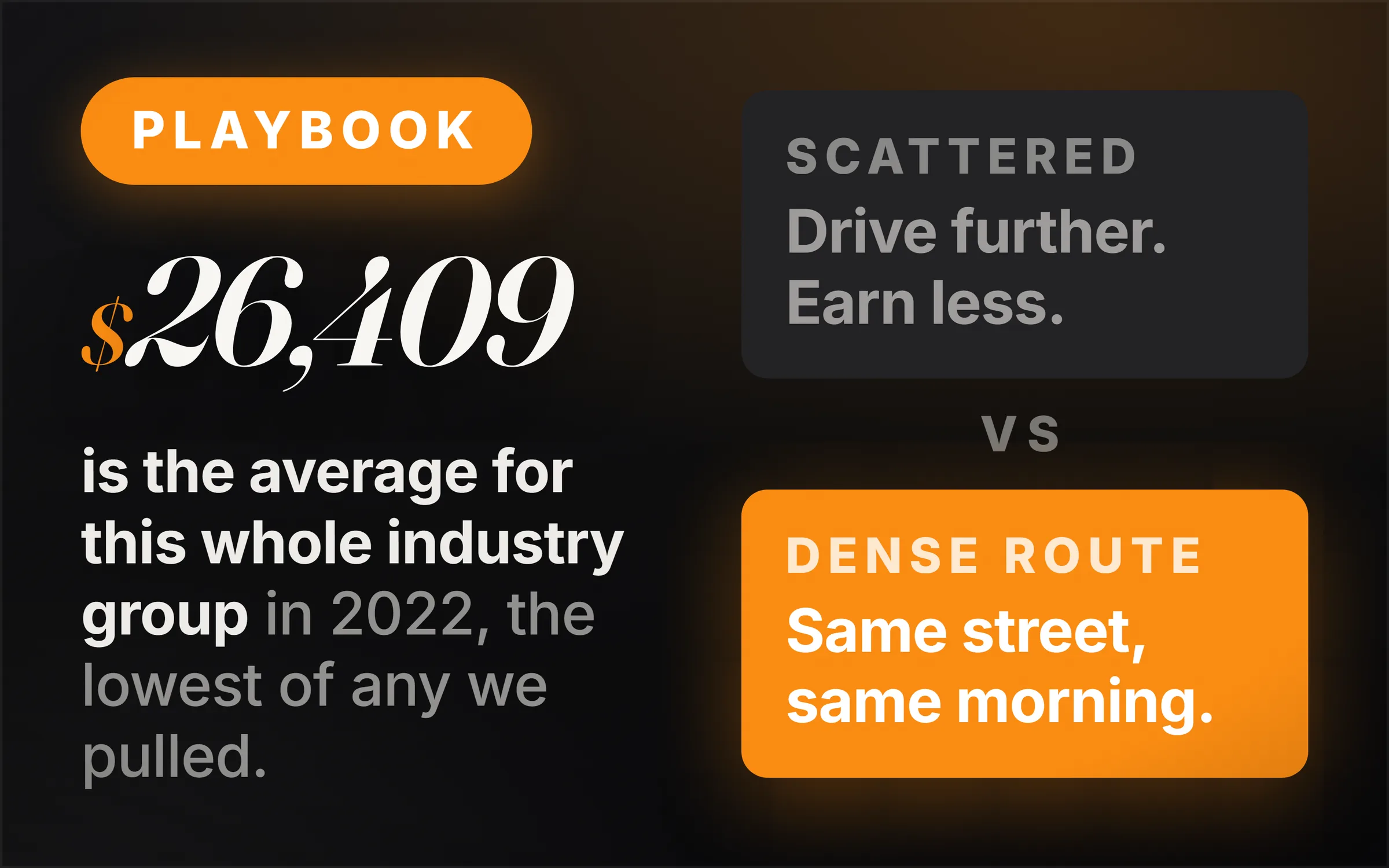
The industry group this trade sits in, the Census category for services to buildings and dwellings, averaged $26,409 per solo firm in 2022 across 1,757,318 establishments with no employees. It is the lowest of any group we pulled, less than half of the next one up. Meanwhile the median wage for an employed grounds maintenance worker was $40,080 as of May 2025.
The average operator in this space is grossing well under what the employed version of the job pays. That is not an argument against it. It is the reason to be deliberate about the two things that move you off the average.
How much does a lawn care business make?
The published figure for the group is $26,409 per solo firm in 2022. That is Census Bureau Nonemployer Statistics for NAICS 5617, services to buildings and dwellings, covering 1,757,318 establishments with no paid employees and $46.4 billion in receipts.
An important caveat, stated plainly because it changes how you should read the number: NAICS 5617 covers landscaping alongside janitorial services, carpet cleaning and pest control. The Census does not publish six-digit detail for solo firms at national level, so this is the group lawn care sits inside rather than a lawn-care-specific average. We tried to pull landscaping services on its own and the Census does not publish it at that level.
Against the wage, BLS put the median for grounds maintenance workers at $40,080 a year, or $19.27 an hour, as of May 2025. The group average for independent firms is about a third below that, on revenue rather than take-home, before equipment, fuel, insurance and self-employment tax.
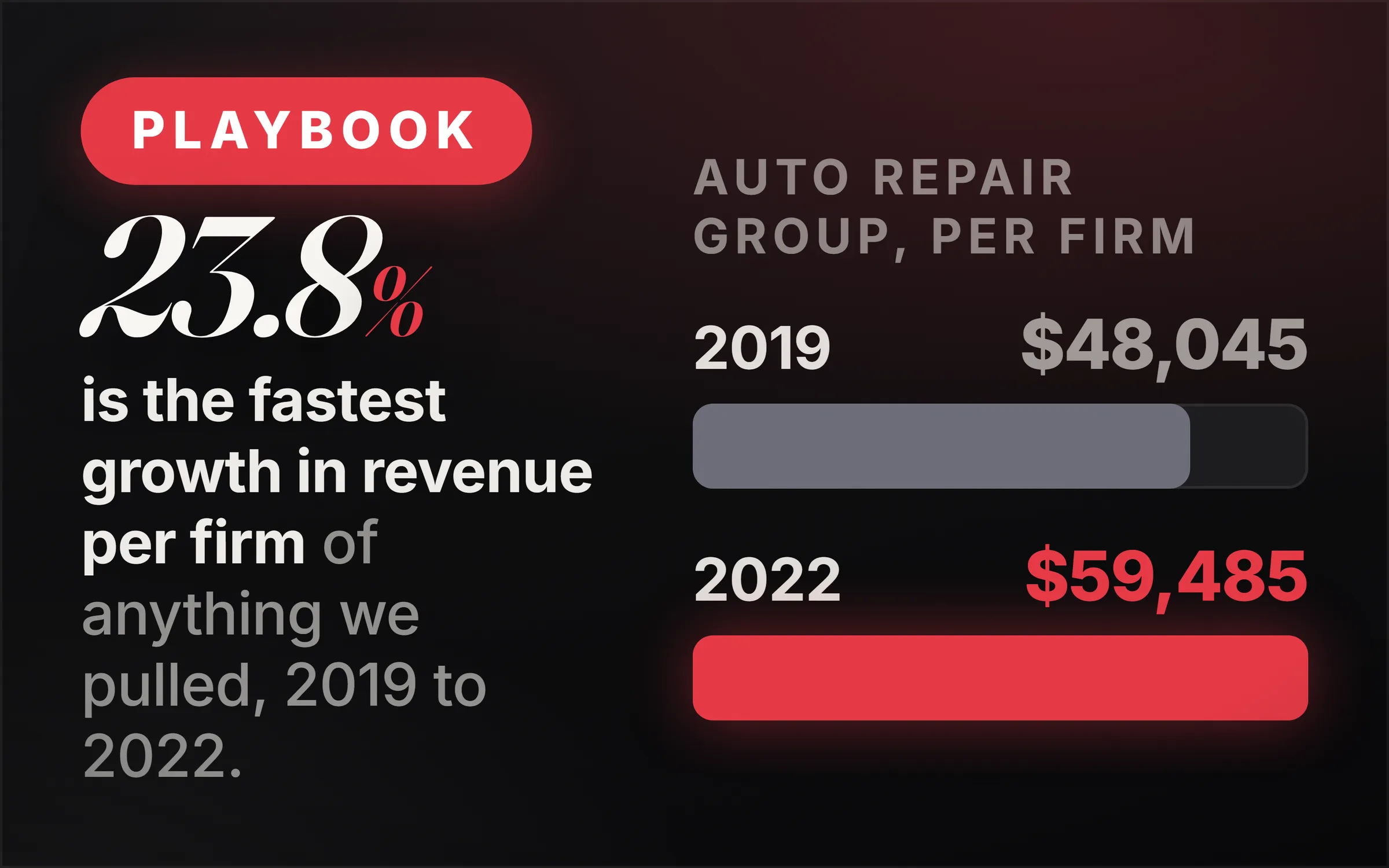
The group also grew: firms up 7.6 percent and average revenue per firm up 18.9 percent between 2019 and 2022. Demand is not the problem here. Crowding and route economics are.
Why is route density the whole business?
Because you are paid for time on a lawn and not for time in a truck, and in a badly organised week the truck wins. This is the single largest determinant of income in this trade and it is decided by which customers you accept, not by how fast you work.
Run the shape of it. A property that takes 35 minutes to service, with 20 minutes of driving either side, consumes 55 minutes of your day for 35 minutes of billable work. Eight hours of that is a working day producing roughly five hours of paid output. Now cluster four properties on one street: the driving happens once, and the same eight hours produces close to seven and a half hours of paid work. Identical effort, identical skill, roughly 50 percent more income.
That is where the $26,409 average comes from. Not from low prices particularly, but from a very large population of operators who accepted every customer who called regardless of where they were, and who therefore spend a third of every day unpaid.
The practical consequence is uncomfortable and it is the most valuable thing in this article: turn down profitable-looking work that is out of area. A well-paying customer twenty minutes from your cluster is usually worth less than a modestly priced one next door to an existing job. Very few new operators can bring themselves to do this, which is precisely why it remains an advantage.
What equipment do you actually need to start?
Enough to service the properties you have sold, which at the beginning is a mower, a trimmer, a blower, fuel and a way to transport them. That is the whole list, and it is deliberately short.
The equipment trap in this trade is the same as in cleaning, and it is expensive here because the machines cost more. Commercial mowers and trailers get bought on the assumption of a customer base that has not been won, and they sit depreciating while the operator quotes. Domestic-grade equipment services domestic lawns perfectly well, and the upgrade should follow the contracts.
The line that deserves genuine attention is the vehicle, because it is the one cost large enough to change the business. If you already have something that can carry the kit, your incremental cost is fuel and wear. If you finance a truck and trailer for this, you have created a fixed monthly obligation that must be met in February when nothing is growing, and that single decision has ended more lawn care businesses than any other.
Insurance is not optional. You are operating rotating blades near property, vehicles, windows and people, and throwing debris is a routine occurrence rather than an exotic risk. Next Insurance publishes general liability "Starting at $19/month" with a footnote reading "for some low-risk businesses," which is a floor for the safest customer and not a quote for powered equipment work.
How do you get lawn care customers?
Street by street, inside the area you have decided to serve, selling a recurring slot rather than a single cut. Density is won at the point of sale, and it cannot be retrofitted afterwards.
The most effective approach in this trade is also the oldest: work a defined set of streets directly, and use every job you win as the anchor for the neighbours. A visible, tidy job in progress is the advertisement, and asking the two houses either side while your equipment is still out is the highest-converting moment available to you. It costs nothing and it builds exactly the geographic cluster the economics require.
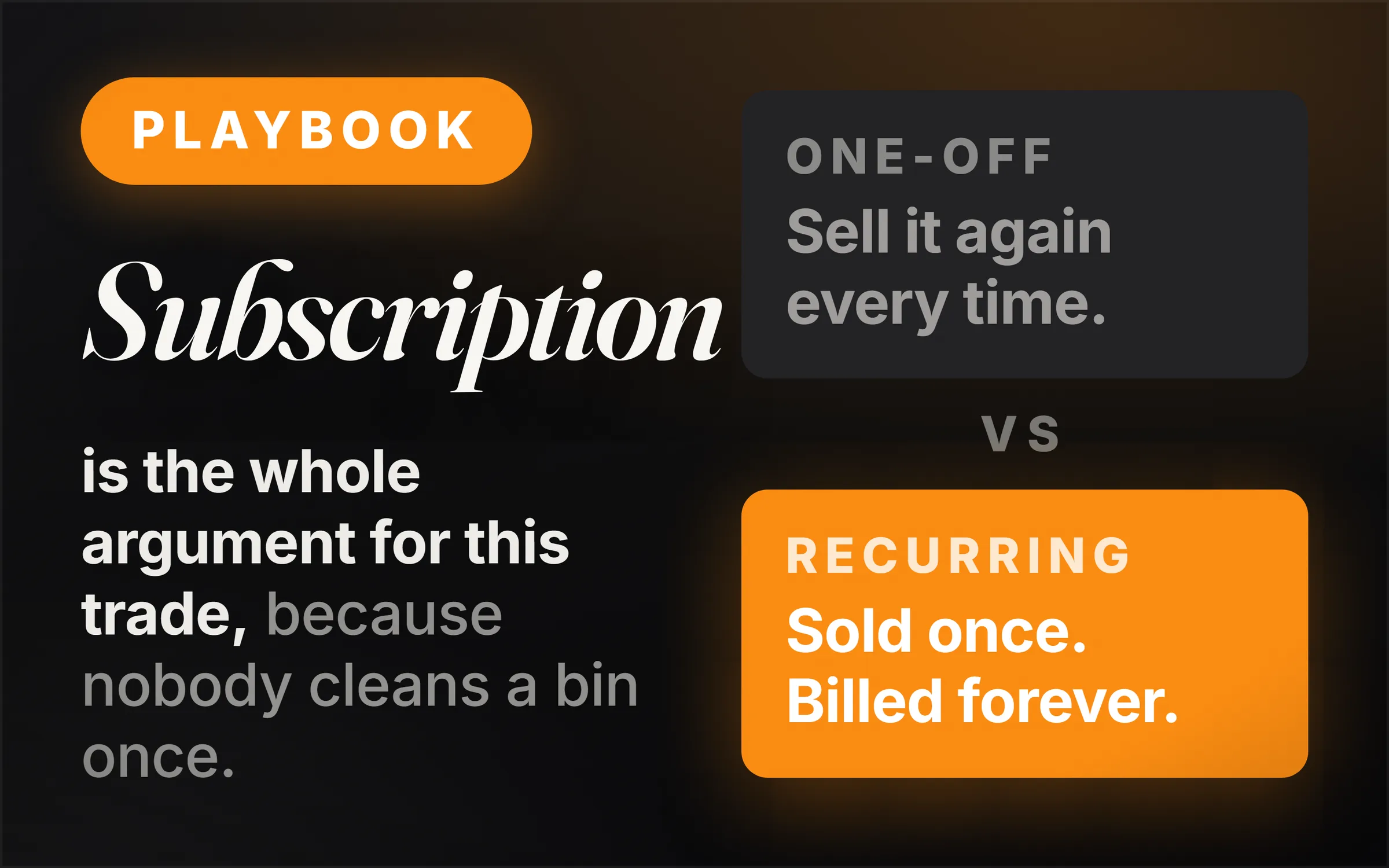
Sell the season, not the visit. A customer agreeing to weekly service through the growing season is a decision made once that pays for months, and it removes the scheduling and re-selling work that consumes operators taking jobs one at a time. It also stabilises the income enough to plan around.
The general sequence for a first customer with no reputation is in how to get your first client without asking for one, and the pattern here is a close cousin of the cleaning business, which we set out in full in how to start a cleaning business.
What should you charge?
Per property, per visit, on a recurring agreement, priced from the time the property takes plus its share of the route, and never at an hourly rate quoted on site.
The reason hourly fails is that it makes your improvement worthless. You will get faster at every property you service repeatedly, and on an hourly basis every minute you save reduces your own income. A fixed price per visit means the same work takes less time and pays the same, which is the only way this business improves.
The pricing input everyone omits is the route share. A property is not just its own service time, it is its own service time plus the drive to reach it, and two properties that take the same 35 minutes are not worth the same price if one is on your existing street and the other is across town. Pricing them identically is how operators end up busy and poor.
Season-long agreements at a fixed monthly rate, rather than per-cut billing, smooth this further: the customer pays the same each month across a growing season of variable intensity, which is easier for them to budget and dramatically easier for you to collect. The collection mechanics are in how to invoice clients and actually get paid.
How do you handle the off-season?
By deciding before your first winter what the business does when nothing grows, and by having the customers who will pay for it already signed.
This is the structural weakness of lawn care and it is entirely predictable, which makes failing to plan for it inexcusable rather than unlucky. Income concentrates in the growing months while fixed costs, and any vehicle finance in particular, run all twelve. An operator who reaches October without a plan spends the winter drawing down whatever the summer produced.
The three standard answers are seasonal service switching, which is leaf clearance in autumn and snow or gutter work in winter depending on your climate; annual contracts that spread a year of payments evenly across twelve months regardless of visit frequency; and simply running the business as an explicitly seasonal one with the off-season used for the next year's sales.
The second of those is the most underused and the strongest. A customer paying a level monthly amount across the whole year, for a service that concentrates in eight months, gives you predictable cash flow and gives them a predictable bill. It requires the agreement to be sold that way from the start, which is a sales decision made in spring, not a rescue attempted in November.
The honest hard part
The hard part is that everything about this business is easy except the part that determines whether it works.
The work is learnable in a day. The equipment is available at any hardware store. The customers are visible from the street. There is no licence between you and your first paying job in most places, and no credential to earn. That accessibility is why 1.76 million people have registered a business in this group, and it is why the average one takes in $26,409.
What is genuinely difficult is the discipline the economics demand: refusing customers who are geographically inconvenient, holding a price when a neighbour's cousin will do it for less, selling a season rather than a cut, and planning for a winter that is eight months away while the summer calendar is full. Those are not skills, they are decisions, and they are unpopular decisions taken repeatedly.
The second hard part is physical and seasonal at once. This is heat, noise, allergens and repetitive strain, concentrated into the months when it is most unpleasant to be outdoors, followed by months with no income unless you built for them. Anyone comparing this to an indoor business on revenue alone is not comparing the same thing.
For how this trade compares with the others in the published data, including which ones beat their equivalent wage, see boring businesses: which ones actually make money.
What the equipment, software and insurance side of it actually costs is priced line by line in what it costs to start a landscaping business.
Two neighbouring trades in the same Census category work on the same route logic: bin cleaning, which is a subscription by default, and laundry pickup and delivery. The highest-revenue local trade we found is junk removal.