Yes, you can get paid a monthly retainer to write other people's LinkedIn posts, with no audience of your own, no writing degree, and no prior experience. Retainers typically run $800 to $2,500 per client a month for eight to sixteen posts, and the tools cost about $70 a month.
It is called LinkedIn ghostwriting, and it is one of the very few writing businesses in 2026 where you do not need to be famous to get paid. You write in a busy professional's voice, they post it under their name, and they pay you every month to sound like the sharpest version of themselves.
The part that stops most people is a belief, not a fact: that you need a big following, or a journalism background, or a personal brand of your own before anyone would trust you. None of that is true. Clients are not hiring you to be famous. They are hiring you to make them look good. The rest of this piece takes each objection apart in order, with the honest numbers.
The video walks the whole model start to finish in one sitting, including the real numbers one operator ran. The written breakdown below stands on its own. Read it, watch it, or both.
What is LinkedIn ghostwriting?
LinkedIn ghostwriting is writing content in someone else's voice, published under their name, on LinkedIn. Your clients are busy professionals, which is founders, executives, consultants, and coaches, who know they should be posting but never do. They have the expertise, the strong opinions, and the real experience. What they do not have is the time or the writing habit to turn any of it into consistent content. That gap between wanting to post and never posting is the entire business.
You become the system that closes the gap. You learn how they think and how they talk, you turn it into posts that sound exactly like them except sharper and actually published, and they review, approve, and post. Their audience grows. Their reputation builds. They pay you every month to keep it going.
Ghostwriting is not deception, and it is worth saying plainly. It has existed for centuries: most CEO books, the majority of published business content, and a large share of what you already read on LinkedIn was written with help. At the professional level it is understood and accepted. What a client's audience sees is someone who values their reputation enough to invest in it.
Do you need an audience or experience to be a LinkedIn ghostwriter?
No, and this is the reframe that changes everything. You do not need a following of your own, because your clients are not hiring you to be famous. They are hiring you to make them look good. Your own profile is proof of concept, not proof of fame. It needs to be complete and professional, with a headline that states what you offer and a handful of posts that show you understand the platform. It does not need ten thousand followers.
You also do not need to be an expert in your client's field. The expertise belongs to the client. Your job is to ask good questions, listen carefully, and turn what you hear into clear prose. A ghostwriter who interviews well and writes clean sentences beats a subject-matter expert who cannot write, every time. And you do not need writing qualifications. LinkedIn posts are not literature. They are clear, direct, conversational pieces, usually 150 to 400 words, that say one thing well. If you can write a clear email, you can learn this, and the feedback loop is fast enough that you are noticeably better by month two.
The people who build the best ghostwriting practices are not the best writers in the room. They are the best listeners. That is genuinely good news if you have been told you are not "a writer."
Why is demand for LinkedIn ghostwriting rising in 2026?
The demand for this is not slowing down, it is climbing, and for reasons that have nothing to do with hype.
LinkedIn's algorithm now heavily favours content from personal profiles over company pages. A post from a founder's own profile reaches a far larger audience than the same post from their company, which has sent a wave of executives scrambling to build personal presences they spent years ignoring. At the same time, B2B buyers now research the actual human before they take a meeting, so an executive who posts consistently closes deals that an invisible one never will. The people who feel this most are the ones with the most to gain, and the least time to act on it.
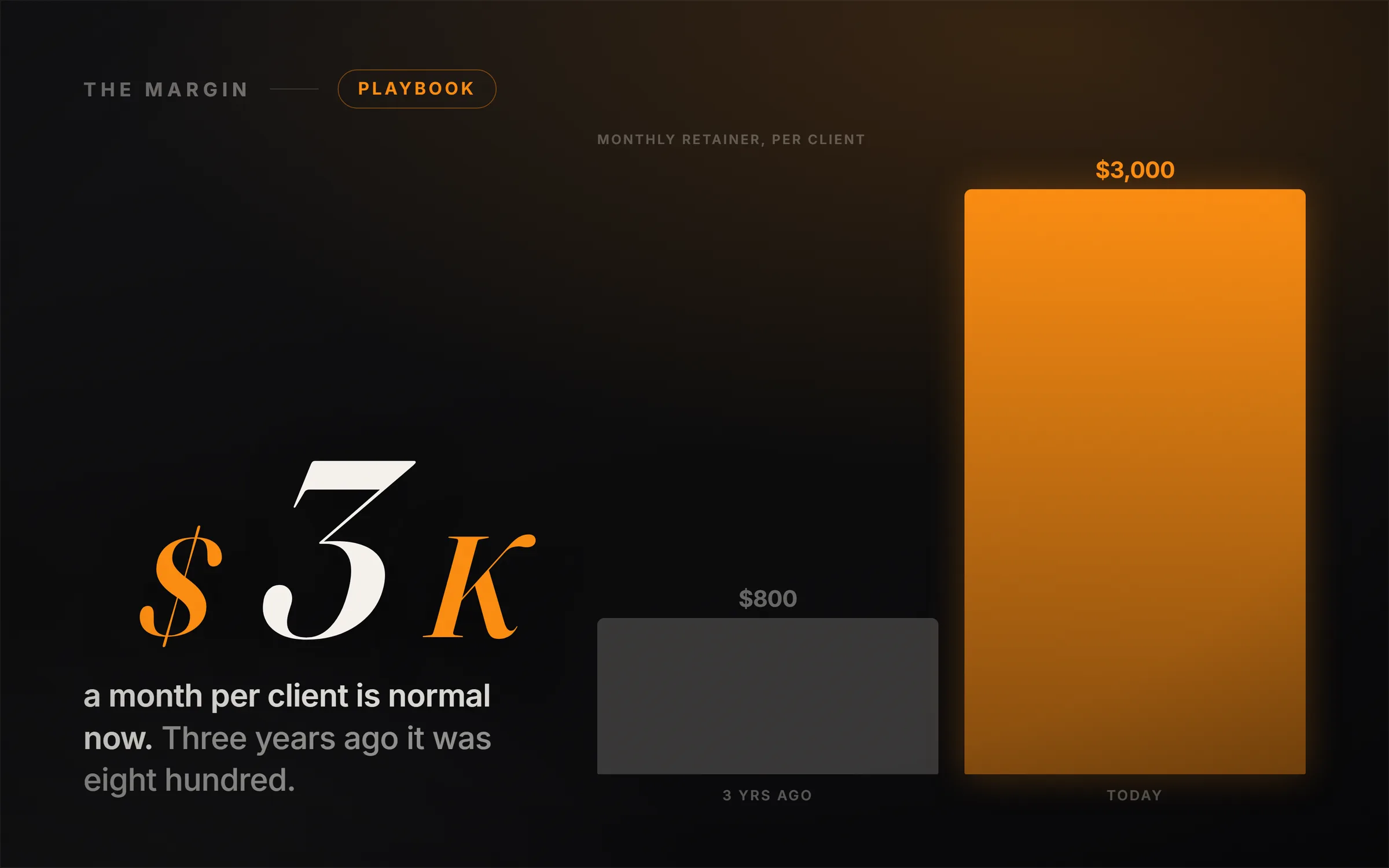
The scale of the gap is the opportunity. LinkedIn's own about page says the platform has "more than 1 billion members in more than 200 countries and territories worldwide", and you can measure the rest of it yourself in ten minutes rather than taking a statistic on trust: search any category, filter to posts, and count how many of the first ten people have an activity section with a gap of months in it. Almost everyone your clients want to reach is wide open. And the number that matters most: three years ago ghostwriters charged $500 to $800 a month per client, and today $1,500 to $3,000 a month is normal for a good one. This market is maturing upward, not down. Outside pricing guides now put quality retainers even higher, into the $2,000 to $5,000 range, which means the honest figures below are conservative, not inflated.
How much do LinkedIn ghostwriters make?
The money in ghostwriting is not one big payday. It is a stack of recurring ones that do not go away. Each client pays a fixed monthly retainer, somewhere between $800 and $2,500, for eight to sixteen posts a month. The client pays whether or not it was their most responsive week, and as you build their voice library the work gets faster while their bill stays the same. Your effective hourly rate climbs quietly.
How the income stacks
- 1 client: roughly $900 a month, about $10,800 a year. Enough to prove it works.
- 3 clients: around $3,000 a month, about $36,000 a year. The rhythm is real now.
- 5 clients: around $5,500 a month, about $66,000 a year. This is the number most people call salary replacement.
- 7 to 8 clients: roughly $8,400 a month and up, clearing six figures a year, at twenty to twenty-five hours a week.
Two things make this different from ordinary freelancing. First, the income recurs. A client you sign today is often still paying you in three to five years, because bookkeeping-style churn does not exist here: the platform never stops rewarding consistency, so there is no natural end to the relationship. Second, retainers stack instead of resetting. A one-off writing gig spikes and returns to zero. A retainer steps up and stays up. Every client you add sits on top of the last one, which is exactly how five to eight clients quietly becomes a full income on part-time hours.
How much does it cost to start a LinkedIn ghostwriting business?
Less than a single client pays you in a month. The full tool stack runs about $70 a month: an optional LinkedIn Premium, a scheduling tool like Buffer or Taplio, a grammar tool like Grammarly Pro, Notion or Google Docs, and a Calendly link. There is no inventory, no office, and no upfront capital beyond your time.
You can also start before you spend a cent. Every tool on that list has a free tier: Google Docs, free Grammarly, free Buffer, free Calendly. The only non-negotiable is a complete, professional LinkedIn profile of your own, which costs nothing but an afternoon. Two clients cover the entire stack with room to spare. Everything after that is profit.
How do you get your first LinkedIn ghostwriting client?
This is the part that decides whether you have a business or a nice idea, and it is more within your control than people expect. LinkedIn ghostwriting is not a viral business. You do not post a reel and wake up to fifty enquiries. Acquisition is direct, personal, and relationship-driven, which is exactly why a beginner with no reputation can still win.
Start with three moves in parallel. Tell the people who already know you what you are now doing, and ask if they know anyone who has been meaning to get on LinkedIn. Engage thoughtfully on the content of people in your target niche, then follow up with a specific, honest direct message that references their work and offers a clear value proposition, with no five-paragraph pitch attached. And build two or three referral relationships with accountants and business coaches, because they work with exactly the founders and owners who need this. Most ghostwriters sign their first client somewhere in weeks two to four, and the second one comes faster than the first.
The other early decision is the niche. You can write for almost anyone, but starting with one type of client, ideally the industry you already know, gets you to your first five clients faster and with better retention. Referrals travel inside niches: one happy consultant refers you to a consultant exactly like them. If you cannot decide, pick the niche where you can name five specific people you would message on day one. That is your niche. The exact outreach scripts, the first-client offer that removes the risk from their side, and the sequence that turns a free first month into a multi-year retainer are what the LinkedIn ghostwriting walkthrough lays out step by step.
Won't AI just replace LinkedIn ghostwriters?
This is the objection every beginner is quietly holding, and it deserves a straight answer. Yes, AI can generate a perfectly fine LinkedIn post in about four seconds. That is exactly the point, and it is not the threat it sounds like, because it reveals what the job actually is.
You are not selling writing. Anyone can write words now. What AI cannot do is sit on a call and catch the one offhand sentence your client throws away that is secretly the best thing they believe. It cannot capture the specific way this one human thinks, the opinion they have never said out loud, the story they forgot was interesting. That is the whole job, and it is deeply human. A fintech founder mutters something mid-call about being profitable since month eight while everyone else chases funding, almost as a complaint, and a good ghostwriter hears an entire post hiding inside it. Three days later that messy spoken aside is a clean, sharp post that sounds so exactly like the founder that their own audience cannot tell they did not write it.
That is what clients are really paying for. Not words on a page, but the feeling that their LinkedIn finally sounds like them, consistently, without them ever lifting a finger. That is a human relationship, not a content-generation task. As we argued in The Moat Moved, the durable advantages left in a world full of cheap software are trust, judgment, and the human accountability on top of the tool. One of Daniel's clients said it best after a few months. He told a colleague, "he basically reads my mind now." That client never left, because you cannot replace someone who reads your mind. AI makes mediocre ghostwriters cheaper to replace. It makes excellent ones more valuable.
What is inside the full LinkedIn ghostwriting walkthrough?
The video and this article explain the model genuinely well. The build, the click-by-click of how you actually run it, is the LinkedIn Ghostwriting Service blueprint on IdeasRepay. It hands you the whole system, not the vague shape of it:
- The voice-capture system, the one skill this business is built on, which is the exact questions that pull someone's real opinions and forgotten stories out in a single forty-five minute call.
- The outreach scripts, word for word, for the first cold approach, the follow-up, and the moment you raise your rate.
- The three pricing tiers, already built from Starter to Authority, so you never have to guess what to charge.
- The five-post content engine, the post types that consistently perform and how to match each one to your client's niche.
- The done-for-you kit: the client onboarding pack, the intake form, the content tracker, and the engagement letter that protects you before a single post goes out.
It is built around one operator, Daniel, a logistics project manager who started by ghostwriting a favour for his manager. His first ghostwritten post got forty-seven comments. By month eight he had six clients paying about $4,800 a month, from a side hustle, with his eyes open the whole way.
If you can listen well, write a clear sentence, and show up consistently, this is one of the most genuinely learnable recurring-income businesses you can start this year, and you do not need an audience of your own to begin. It sits alongside other recurring service plays we have broken down, like how to start a bookkeeping business, where the same engine applies: a skill you learn fast, a client who stays for years, and income that stacks instead of resetting.
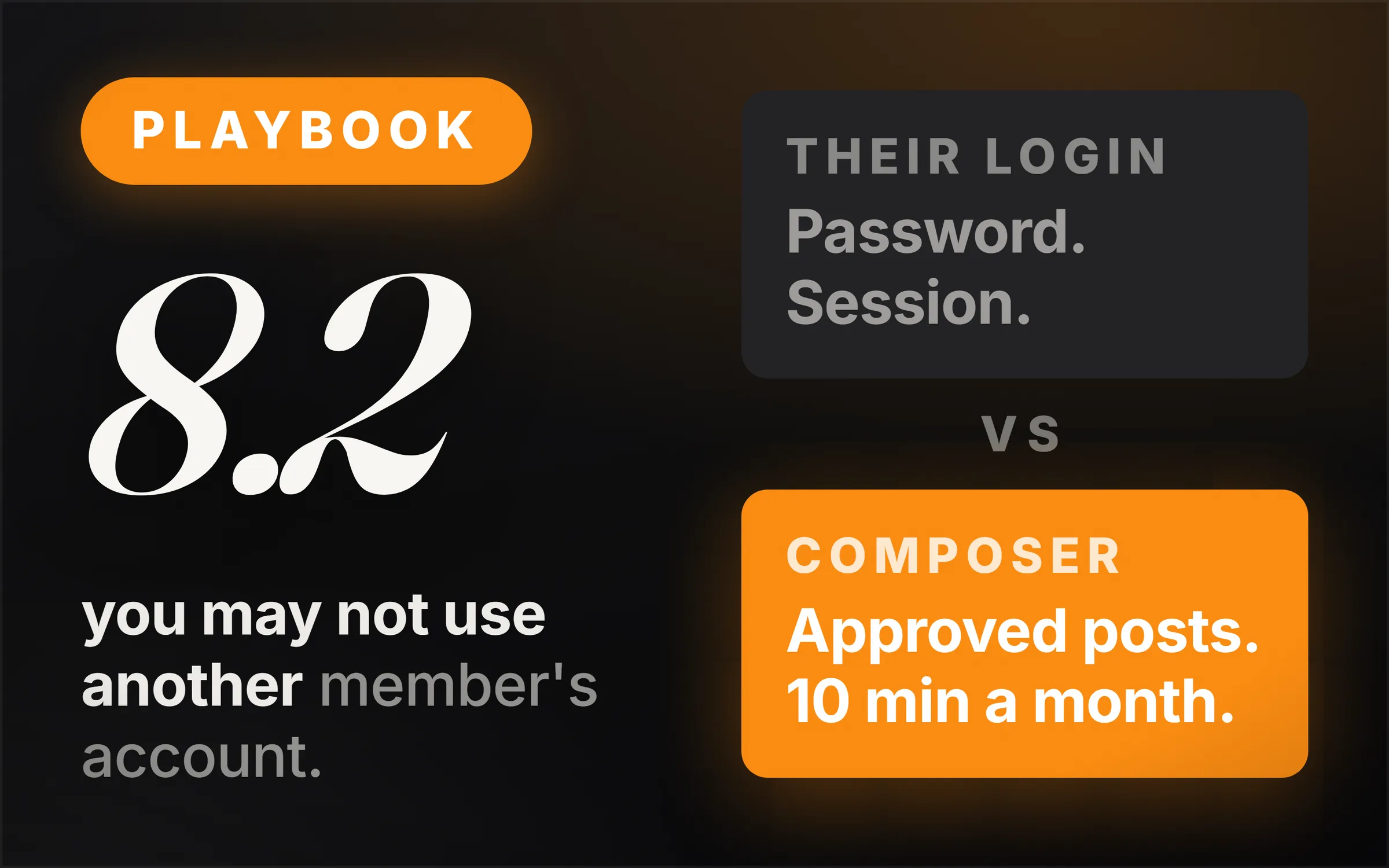
Before you take on a client, read the one rule this trade mostly skips: you are not permitted to hold their login, and the compliant way to deliver a month is in LinkedIn ghostwriting without account access, along with the voice intake and the real prices.
The full walkthrough is waiting at ideasrepay.com. Optimise your own profile today. Write three sample posts this week. Send the first message before the weekend.
Your first client is one conversation away.