Most AI businesses cost almost nothing to start but run on a usage meter. An AI voice agent costs about 5 cents a minute on Vapi before model and phone charges; white-labelling on GoHighLevel costs $497 a month; AI evaluation work pays from $8 an hour on Prolific to $50 to $60 on Mercor. Only AI training for companies has no meter at all.
The honest answer to what an AI business costs to start is that four of the five below run on a meter, and one has no meter at all. The meter is the part nobody mentions, because it is boring, it is small at first, and it decides your margin later.
So this page prices five models from the vendors' own published pages: what you pay while it runs, what the work pays, and where the published number and the real number come apart. That last gap is the important one, and there is a single figure at the bottom of this page that makes it impossible to ignore.
The film runs these five in the same order, cheapest to start last, because the cheapest one to start is the one people walk straight past.
Which AI business is cheapest to start?
The one with no software in it. That sounds like a trick answer and it is the most useful line on this page, because cost-to-start and cost-to-compete move in opposite directions.
Four of the five models below have a price list behind them: a per-minute rate, a monthly plan, a credit allowance, somebody taking their cut before you take yours. The fifth has a door anybody can walk through, which is why you will find so many people already standing in it.
Everything that costs money to start keeps somebody out. And everything that keeps somebody out is worth more once you are inside. So if you are choosing on price alone, choose the direction you want that trade to run, and know which one you picked.
What does an AI receptionist cost to run?
Pennies a minute, and the numbers are published.
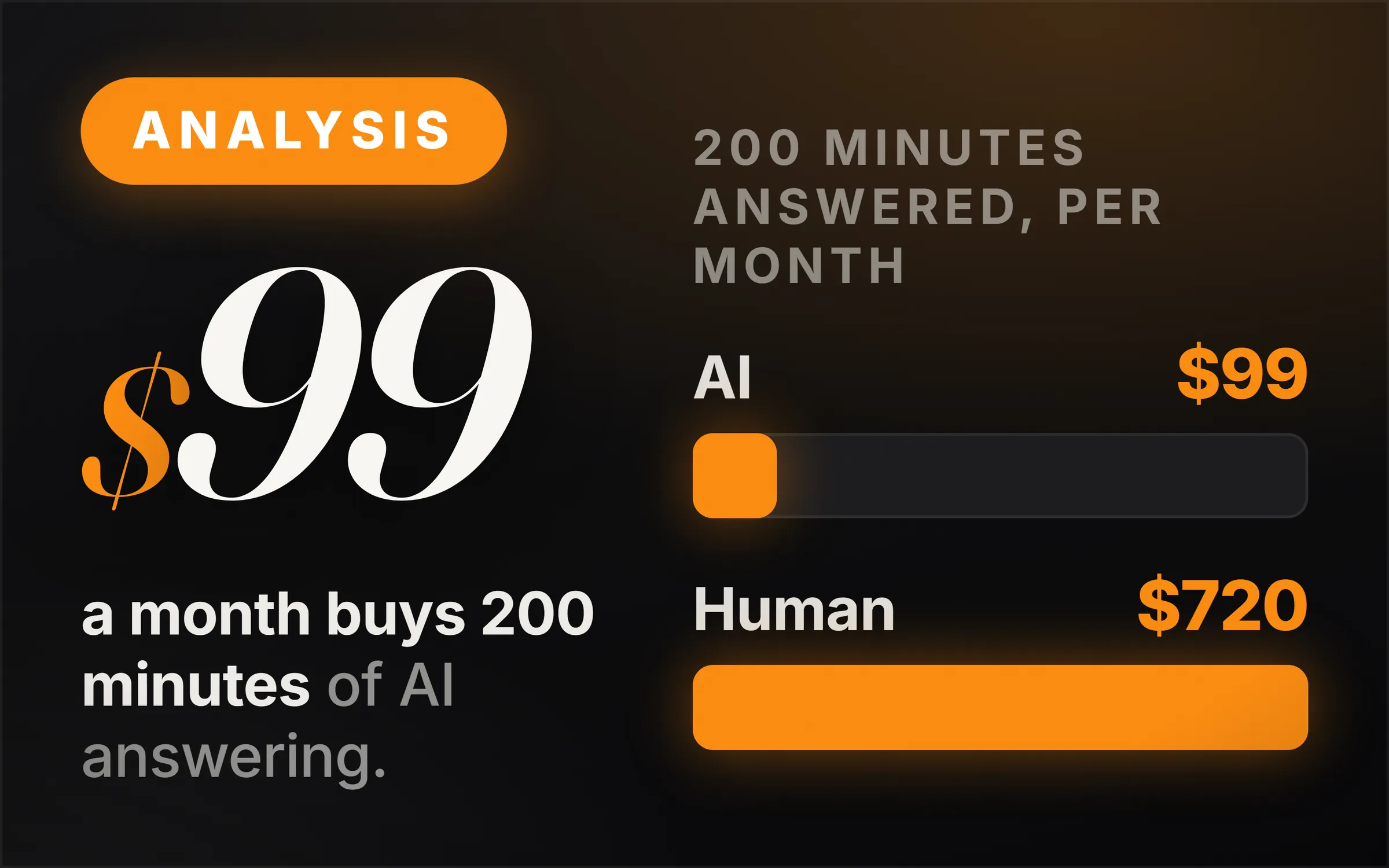
- Vapi: five cents a minute for the platform, with the language model and the phone line billed on top.
- Bland: eleven to fourteen cents a minute, all in.
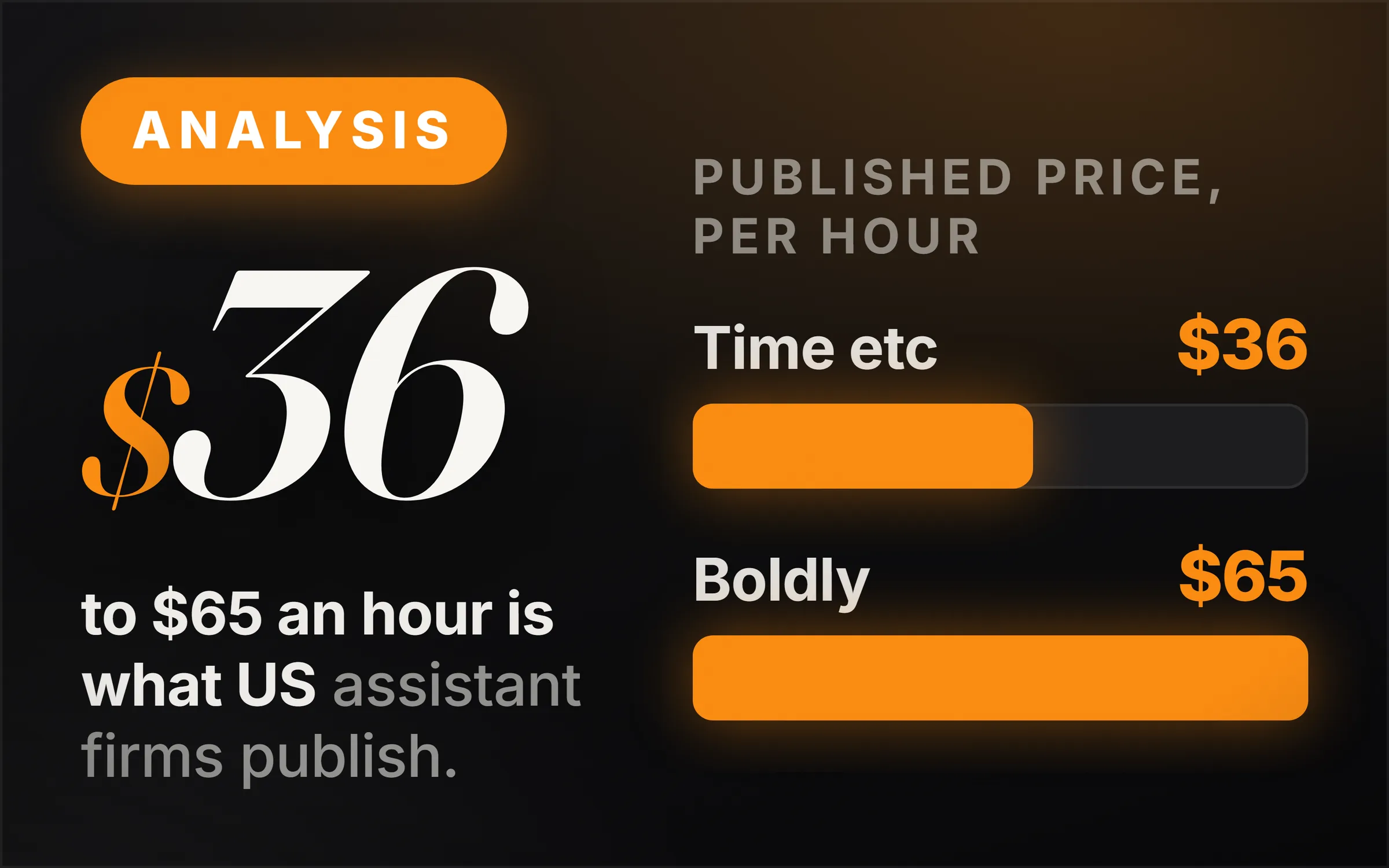
- GoHighLevel: $497 a month if you want the whole thing running under your own brand rather than the vendor's.
- A phone number: a couple of dollars a month.
So a five minute booking call costs you under a dollar. The build itself is an afternoon on a template: you describe the business, connect the calendar it already uses, point a number at the agent, and it picks up on the first ring at eleven at night.
The thing that decides whether you keep the account is not the build. It is the fallback. Somebody will call and ask something the agent has no answer for: an insurance question, a complaint, a price for a treatment that was never on the list. An agent that guesses gets cancelled in week two. An agent that says it will pass this to the team, and then genuinely forwards the call to a human number, keeps the account for a year. That gets built first, before anything clever.
Who pays for it is any business that earns its money with its hands full. Dentists, med spas, plumbers, heating engineers, law firms, car dealerships, salons, vets. A plumber under a sink cannot answer the phone, and the person who called is already dialling the next name in the results.
How the price gets set is out of their arithmetic, not yours. Two questions do it: how many calls come in on a normal week, and what is a new customer worth in the first year. Thirty calls a week, eight of them ringing out, a customer worth two thousand dollars, and the phone is losing that practice more in a month than you would charge them in a year. You never made a claim. You asked two questions and let their own numbers close it.
The first move costs an hour. Pick one trade and call ten of them at seven in the evening on a weekday. Count the ones that ring out, the ones with a full voicemail box, and the ones that answer sounding like you interrupted a job. The ones that ring out are your list, and you now know something about their business that they do not.
What does AI evaluation and data annotation actually pay?
Two rates for what looks like the same task, and the spread between them is more than ten to one.
The work is straightforward: you read what a model produced and mark what is wrong with it. You are not writing the answer, you are grading it. A contract clause it misread, a journal entry posted to the wrong side, a sales email that would get the sender blocked.
Here is the published ladder, and it is unusually transparent for this corner of the internet:
| Platform | Published rate |
|---|---|
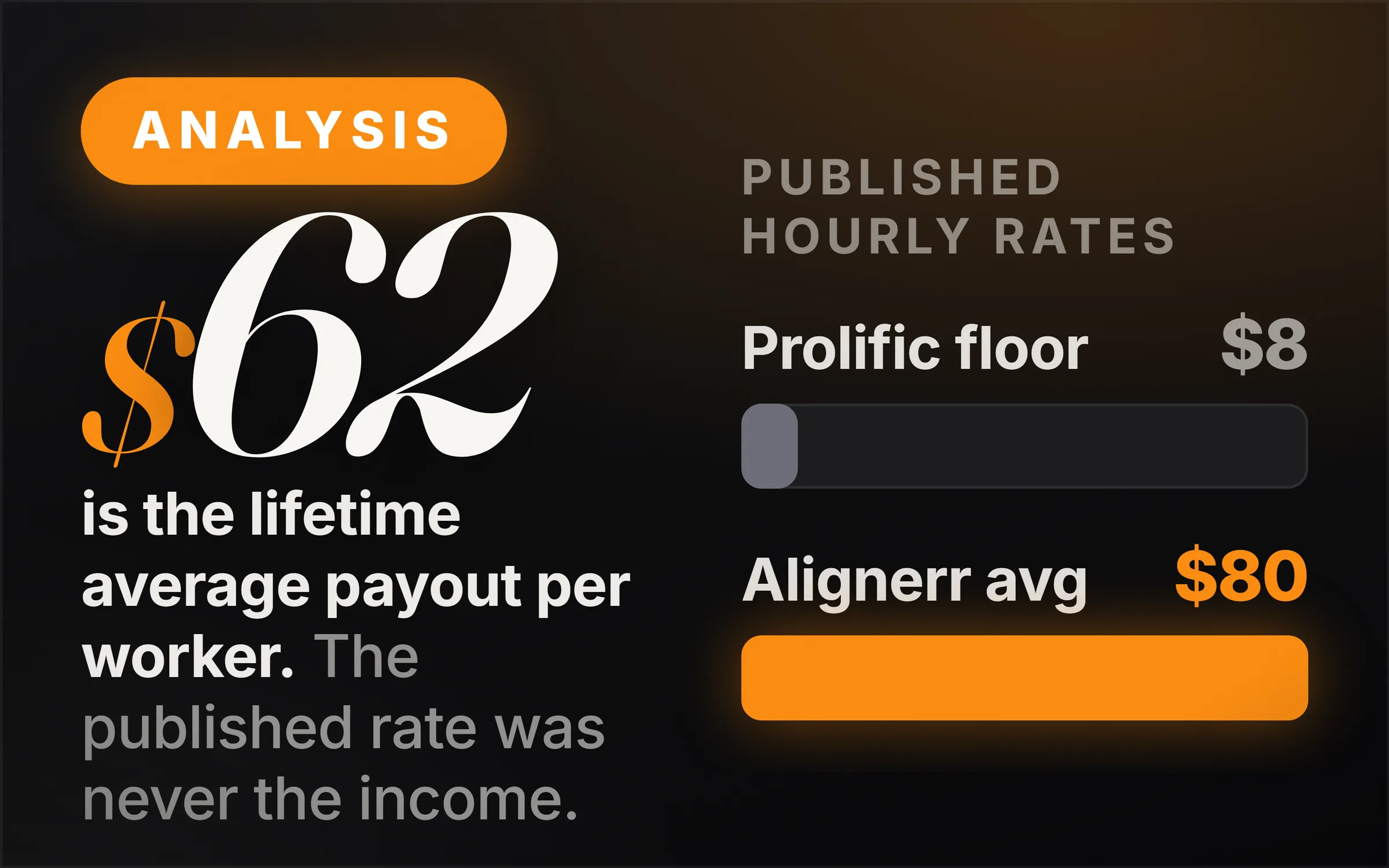
| Prolific | $8 an hour floor, enforced |
| DataAnnotation | $25 to $30 for general work; $50 to $100+ once in as a domain expert |
| Mercor | $50 to $60 an hour generalist review; $70 generalist expert; specialist briefs priced per task, with a corporate development task posting at $2,000 |
| Alignerr | around $80 an hour average across its expert network |
What separates the top of that table from the bottom is not skill at the task. It is whether you can evidence a qualification: a law degree, an accountancy certification, a medical licence, real years in product or sales. Same platform, same kind of work, and the gap is eight dollars an hour against over a hundred.
Which is why the first move is a document, not an application. Apply to two platforms rather than five, and attach the credential to the application instead of promising it later. The certificate, the registration number, the letter. That single step is the difference between the bottom row and the top one.
How much do AI data annotation jobs really pay per person?
Far less than the hourly rates suggest. Remotasks has paid $15 million across more than 240,000 people, about $62 each for the life of the account, because the rate is not the income; the volume of work behind it is.
Those hourly rates are real. What moves is how much work shows up behind them, and that is the question nobody answers on the way in.
Remotasks has paid out $15 million across more than 240,000 people. Divide it: that is roughly $62 each, for the life of the account.
Read the two numbers together and you have the whole shape of this category. The rate is a fact about the task. The income is a fact about the queue, and the queue is not yours. Nothing about $60 an hour is a lie. It is simply not an answer to "what will I earn," because it says nothing about how many hours arrive.
This is the discipline worth carrying into every model on this page and every one you see elsewhere. A rate is a ceiling on one unit of work. Ask separately how many units exist, who decides that, and whether you can influence it. In four of the five models here you can, because you are the one finding the client. In this one, you cannot.
What does an automation business cost, and which job do you take first?
Almost nothing to start, and the platform choice is a fork in your cost curve rather than a feature comparison.
The work is deleting the part of a business where somebody types the same thing twice. An enquiry arrives as an email and a person keys the name, number and address into the customer database by hand. An order lands in one system and somebody announces it in another so it gets picked up. Receipts get photographed, typed in, categorised, filed. Nobody was hired to do any of it, and it is the first thing dropped when the week gets busy, which is exactly the week it costs the most.
Zapier does this by clicking through it and bills a monthly plan that scales with how much runs through it. n8n does the same thing with more control and a licence that lets you run it on your own machine, which puts the software cost under the entire build at roughly nothing. Buy the tier that fits the client's volume rather than the one that fits your ego.
The job you take first is not the complicated one. Take the one that happens the most often. An owner feels a daily job disappear. Nobody in history has ever felt a monthly one, and a monthly job is where beginners go to build something impressive that nobody notices.
Who pays is a business of roughly three to fifty people. Smaller and the typing has not started hurting. Bigger and they already employ somebody whose job is systems, and now you are selling to a department.
The price is built in front of them, out of their own week. Forty enquiry forms at three minutes each is two hours a week, which is a hundred hours a year, and they can already tell you what an hour of that person costs. You are reading their number back to them, and almost nobody argues with their own number.
The first move is to build nothing. Sit with one business for one hour, watch somebody work, and write down every place a piece of information gets entered a second time. Offer no solutions in the room. Take the list home, put the minutes and the frequency beside each line, and bring it back. The list is the proposal.
Why creative volume is the only model where getting busier helps your margin
Because you buy the allowance up front. Every other model here bills you per unit as you use it, so a busy month costs you more. Here the plan comes with credits or minutes, and your cost per finished asset falls the more of that allowance you burn.
The thing that changed in this category is not quality, it is count. One bottle becomes forty backgrounds, shot at midnight, for nothing. One advert becomes fifteen versions with fifteen different opening lines so the ad platform can find out which one people stop for. An hour of footage goes into OpusClip and comes back as thirty vertical clips with captions burned in. A script goes into ElevenLabs and comes out as a voice that is identical across every video that brand ever makes, then comes out again in Spanish and German in the same voice.
None of that is your advantage, because your client can open every one of those tools this afternoon. What they cannot do is promise fifteen versions by Friday, every Friday, and then still be doing it in March. Most agencies will not put that in writing. Put it in writing. You are not selling the tool, you are selling the Friday.
Who pays is anybody already spending money here: online shops with a catalogue that photographs badly, local businesses with a physical product, agencies quietly behind on delivery, and above all anybody already running paid ads, because they have the budget line, they already believe testing versions is worth doing, and you never have to start that argument.
Where the price comes from is the thing you are replacing, and it has a price in your own city. Call a product photographer and ask for a day rate. Call a voice actor. Ask an editor what an hour costs. Three phone calls gives you a ceiling and a floor from your own market rather than somebody else's video.
The first move skips the pitch. Find one business whose photography is letting them down, make the assets without being asked, and send them with nothing attached except the work. If it sells itself you have a client by the weekend, and if it does not, you lost one evening.
Which AI business has no running costs?
Teaching a company's staff to use the AI seats it already pays for, in a half-day or full-day session on their real documents. It needs no tool, subscription or supplier, so you keep every dollar you charge, which is exactly why it is the crowded one.
The fifth one has no tool, no subscription, nothing to build and nobody taking a cut, which is exactly why it never makes a list like this. Whatever you charge, you keep every dollar.
A company buys forty seats. Everybody opens the chat box, types a question, reads the answer, closes the tab. The parts that would actually change the work sit one menu away and nobody has clicked on them. So you sit with one person, or a team of six, for an afternoon, and you set the thing up around the job they actually do: a project that already knows the company so nobody re-explains the business every conversation, a saved instruction that produces the firm's own format the same way every time, their document store connected so answers come out of their files rather than out of the air. Then you take the three things that person does every week and build all three while they watch.
The one thing that decides it is using their real documents in the room. Their contracts, their spreadsheets, their genuinely messy folder. The second you demo on a made-up example you have become a training video, and they can get one of those for free.
Who pays is the person who signed off the licences and has nothing to show for them. They are not buying training, they are buying something to point at. The other buyer is anybody who bills by the hour, so lawyers, accountants and consultants, because an hour saved converts into money without you having to argue that it should.
What you charge is a half day or a full day, set against the consulting and training day rates where you live, which are sitting in job adverts you can read tonight.
It does not scale on its own. It is hours for money and there are only so many afternoons in a week. What it buys you instead is the truth, early, because you find out what somebody will genuinely pay before you have built anything at all.
The first move is one free session with somebody you already know. Do not prepare a curriculum. Sit down, ask them to show you the part of their week they most resent, and fix that one thing while they watch. Write down every question they ask you while you do it. Their questions are the curriculum, and by the second session you will know your price.
So which one should you start?
Read the five as two groups rather than five options.
The metered four all have somebody standing between you and the money, which is a cost and also a moat. The per-minute rate, the monthly plan, the credit allowance and the platform's cut are the reasons the category is not infinitely crowded, and once you are inside, that same friction is working for you.
The unmetered fifth has no barrier at all, which is why it is full, and why the differentiation has to come from you rather than from your stack: whose real documents you opened, whose actual Monday you fixed, in front of them.
If you want the other half of this, the pricing side, we ran the numbers on how much to charge for AI services, with published rate cards from the agencies and vendors that publish them. And for the models themselves, we have standalone pieces on the AI receptionist business, starting a bookkeeping business with no experience, and realistic AI side hustles for beginners.